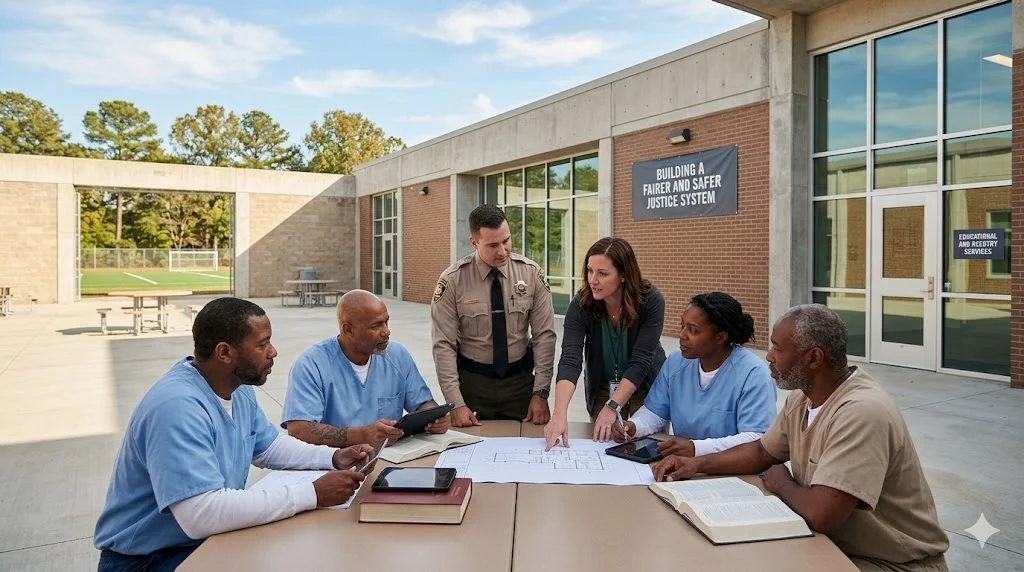
The Future of Prison Reform in America
Table of Contents
Meta Description: Explore the future of prison reform in America, including rehabilitation programs, sentencing reform, prison education, mental health treatment, and public safety improvements.
Introduction
The future of prison reform in America is becoming one of the most important discussions in criminal justice today. For decades, policymakers, community leaders, and justice advocates have debated how to create a correctional system that protects public safety while also promoting rehabilitation and reducing repeat offenses.
As prison populations, correctional costs, and recidivism concerns continue to challenge the justice system, many experts believe the future lies in evidence-based reforms that focus on education, rehabilitation, mental health treatment, and successful reintegration into society. Rather than relying solely on punishment, modern prison reform aims to address the root causes of criminal behavior and help individuals become productive members of their communities.
Understanding the Need for Prison Reform
America has one of the largest correctional systems in the world. While incarceration plays an important role in public safety, many experts argue that long-term success requires more than confinement alone.
Challenges facing the current system include:
- Prison overcrowding
- High recidivism rates
- Mental health concerns
- Limited educational opportunities
- Employment barriers after release
- Rising correctional costs
These issues have encouraged policymakers to explore reforms that improve outcomes for both incarcerated individuals and society as a whole.
How Prison Reform Has Evolved
Prison reform is not a new concept. Throughout American history, reformers have advocated for changes that make correctional institutions more humane and effective.
Internal Link
To understand how modern prison reform developed, read our article on What Did Reformers Commonly Believe About Prisons and Asylums? at:
What Did Reformers Commonly Believe About Prisons and Asylums?
This historical perspective helps explain why rehabilitation remains a central goal of prison reform efforts today.
The Growing Focus on Rehabilitation
One of the biggest shifts in modern corrections is the growing emphasis on rehabilitation.
Rather than simply housing offenders, many reform initiatives focus on helping individuals develop the skills needed to succeed after release.
Key rehabilitation programs include:
- Educational courses
- Vocational training
- Life skills development
- Substance abuse treatment
- Behavioral counseling
- Employment preparation programs
Research consistently shows that individuals who participate in meaningful rehabilitation programs are less likely to return to prison after release.
The Role of Prison Education Programs
Education is expected to play a major role in the future of prison reform in America.
Educational opportunities help incarcerated individuals:
- Earn diplomas and certifications
- Improve literacy skills
- Develop professional qualifications
- Increase employment opportunities
- Build confidence and self-sufficiency
Many experts view prison education as one of the most effective tools for reducing recidivism and supporting successful reentry.
Expanding Mental Health Services
Mental health treatment is another area receiving increased attention.
A significant number of incarcerated individuals struggle with:
- Depression
- Anxiety disorders
- Trauma-related conditions
- Substance use disorders
- Behavioral health challenges
Future prison reform efforts are likely to include:
- Expanded counseling services
- Crisis intervention programs
- Trauma-informed care
- Mental health assessments
- Ongoing treatment support
Addressing mental health needs can improve rehabilitation outcomes and reduce future interactions with the criminal justice system.
Sentencing Reform and Fairness
Sentencing reform remains one of the most discussed aspects of criminal justice reform.
Supporters argue that sentencing policies should:
- Promote proportional punishment
- Reduce unnecessary incarceration
- Address prison overcrowding
- Focus prison resources on serious offenders
Future reforms may involve reviewing mandatory minimum sentencing laws and expanding alternatives to incarceration for certain nonviolent offenses.
Technology and the Future of Corrections
Technology is expected to transform correctional systems in several ways.
Future innovations may include:
Digital Education Platforms
Online learning systems can expand educational opportunities within correctional facilities.
Virtual Counseling Services
Telehealth programs can improve access to mental health treatment.
Reentry Support Tools
Digital platforms can connect individuals with:
- Employment resources
- Housing assistance
- Educational opportunities
- Community support services
Technology has the potential to improve efficiency while expanding access to important rehabilitation resources.
Reducing Recidivism Through Reentry Programs
Successful reentry is critical to the future of prison reform.
Many formerly incarcerated individuals face challenges such as:
- Finding employment
- Securing housing
- Rebuilding family relationships
- Accessing healthcare
- Continuing education
Strong reentry programs help individuals navigate these obstacles and reduce the likelihood of returning to prison.
Future reform efforts are expected to invest heavily in reentry support because preventing reoffending benefits both individuals and communities.
Community-Based Alternatives to Incarceration
Many criminal justice experts believe community-based programs will become increasingly important.
Examples include:
- Probation programs
- Diversion initiatives
- Drug treatment courts
- Restorative justice programs
- Community supervision
These alternatives can provide accountability while avoiding some of the negative consequences associated with incarceration.
Why Prison Reform Matters for Public Safety
Some people assume prison reform focuses only on helping incarcerated individuals. In reality, many reforms are designed to improve public safety.
Effective prison reform can:
- Reduce repeat offending
- Lower correctional costs
- Improve rehabilitation outcomes
- Strengthen communities
- Support crime prevention efforts
When individuals successfully reintegrate into society, communities become safer and more stable.
Challenges Facing Future Reforms
Despite growing support for reform, several challenges remain.
These include:
Funding Limitations
Expanding educational and rehabilitation programs requires investment.
Political Differences
Criminal justice policies often generate debate among policymakers.
Public Perception
Some people remain skeptical about reform efforts and their effectiveness.
Implementation Barriers
Large correctional systems can take time to adopt new policies and programs.
Addressing these challenges will be important for the long-term success of prison reform initiatives.
What the Future May Look Like
The future of prison reform in America will likely emphasize:
- Rehabilitation over punishment alone
- Evidence-based policies
- Expanded educational opportunities
- Better mental health treatment
- Stronger reentry support
- Reduced recidivism
- Improved public safety outcomes
Correctional systems are increasingly being evaluated not only by how many people they incarcerate but also by how effectively they help individuals rebuild their lives.
Conclusion
The future of prison reform in America is centered on creating a justice system that balances accountability, rehabilitation, and public safety. As policymakers continue to explore innovative solutions, reforms focused on education, mental health treatment, vocational training, and successful reentry are expected to play a major role.
By investing in programs that help individuals develop skills, address underlying challenges, and successfully reintegrate into society, America can build a correctional system that is more effective, more humane, and better equipped to reduce crime in the long term.
FAQs
What is the future of prison reform in America?
The future of prison reform focuses on rehabilitation, education, mental health treatment, sentencing reform, and reducing recidivism while maintaining public safety.
Why is prison reform important?
Prison reform helps improve correctional outcomes, reduce repeat offenses, address overcrowding, and support successful reintegration into society.
How can education reduce recidivism?
Education improves employment opportunities and life skills, making individuals less likely to reoffend after release.
What role does mental health treatment play in prison reform?
Mental health treatment addresses underlying behavioral and psychological challenges that may contribute to criminal behavior.
How do reentry programs help former inmates?
Reentry programs provide support with employment, housing, education, and community resources, helping individuals successfully transition back into society.
Can prison reform improve public safety?
Yes. Effective prison reform can reduce recidivism, strengthen communities, and contribute to long-term public safety improvements.