Table of Contents
Prison reform programs United States wide have moved from abstract policy debates to concrete, named initiatives you can actually point to. Rather than discussing reform in the abstract, this guide catalogs specific programs currently operating across U.S. states — what each does, who it serves, and where it operates — so you can see what prison reform programs in the United States look like in practice.
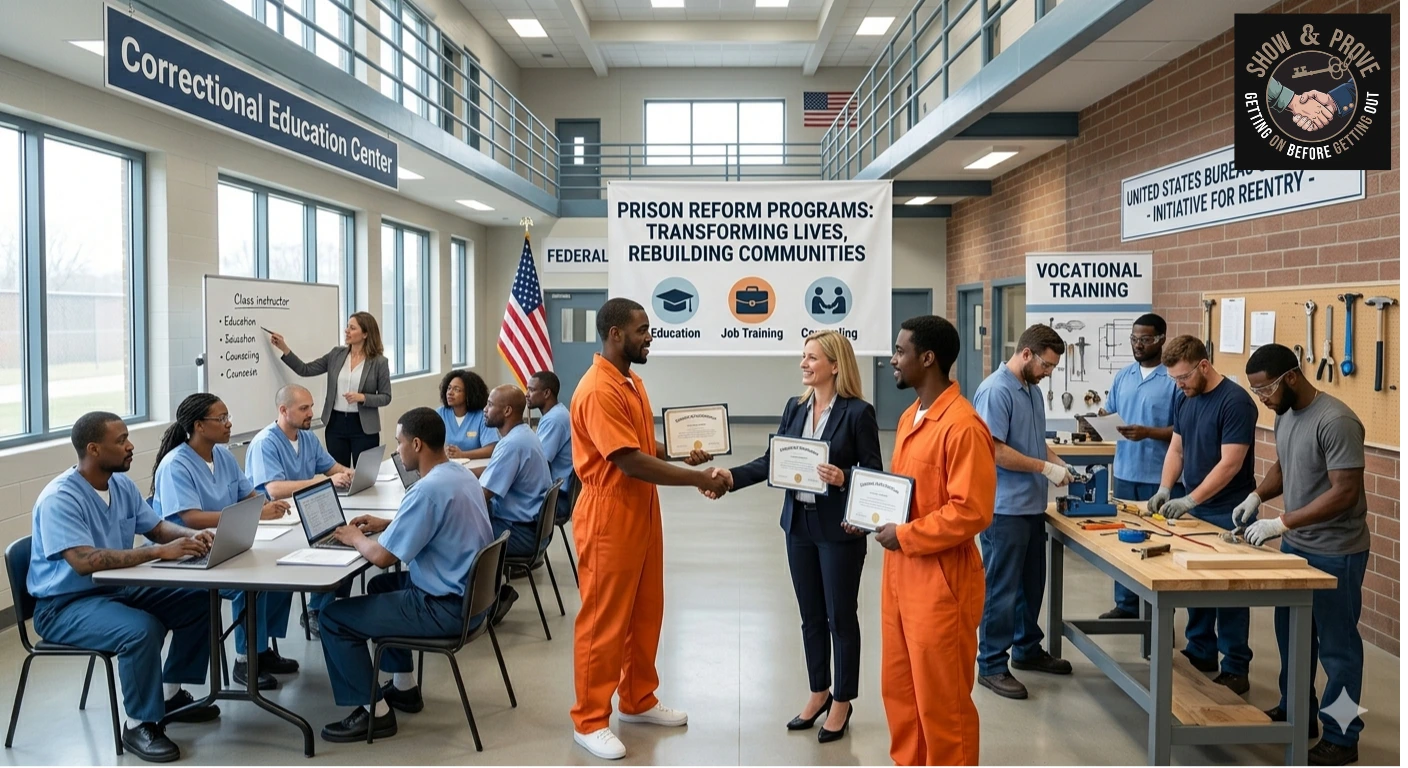
Why Prison Reform Programs in the United States Matter
Roughly 95% of incarcerated people are eventually released, and what happens during their sentence strongly predicts what happens after it. Research consistently shows that education, vocational training, and structured reentry support reduce recidivism — participants in correctional education programs are significantly less likely to return to prison than non-participants. That evidence base is why both red and blue states now fund these programs; for a deeper look at the research, see our guide to evidence-based prison reform programs that work.
Second Chance Pell Program (Federal)
Restores federal Pell Grant eligibility for incarcerated individuals pursuing postsecondary education, expanded nationwide after a multi-year pilot phase. Participating colleges partner directly with state and federal correctional facilities, offering everything from associate degrees to bachelor’s coursework. It is the single largest federal investment in prison education, and it anchors many of the education programs driving prison reform nationwide.
Texas Windham School District
An entire school district operating exclusively inside Texas prisons, offering GED prep, vocational certifications, and career and technology education to incarcerated students statewide. Windham serves tens of thousands of students each year, making it one of the largest correctional education systems in the country — and a model other states study when designing their own in-prison schooling.
California’s Prison to Employment Initiative
Connects individuals nearing release with workforce development boards, job training providers, and employers willing to hire people with conviction histories, coordinated at the regional level across California counties. The initiative treats employment as the core of successful reentry — a principle shared by the prisoner reentry programs operating in most states.
New York’s Fair Chance Act
A ‘ban the box’ style law restricting when NYC employers can ask about criminal history during hiring, aimed at reducing employment barriers for formerly incarcerated job seekers. Employers must make a conditional offer before running a background check, and must justify any withdrawal of the offer in writing. Dozens of states and cities have since adopted similar fair-chance hiring rules.
Other Notable Prison Reform Programs United States Wide
Beyond the flagship examples above, several other programs are worth knowing. The federal Prison Industry Enhancement Certification Program (PIECP) lets incarcerated workers earn prevailing wages in partnerships with private employers. Ohio’s Advanced Job Training programs pair apprenticeship-style trades instruction with employer pipelines. And residential substance-abuse treatment programs in the federal Bureau of Prisons offer sentence reductions for completion — tying rehabilitation directly to release incentives.
- Second Chance Pell — federal education funding, nationwide
- Windham School District — in-prison education, Texas
- Prison to Employment Initiative — job placement, California
- Fair Chance Act — hiring protections, New York City
- PIECP — prevailing-wage prison work, federal
FAQs
What is Second Chance Pell?
A federal program restoring Pell Grant access for incarcerated students, allowing them to pursue college coursework and degrees while serving their sentence.
Are these programs available in every state?
No — aside from federally funded programs like Second Chance Pell, most listed programs are state or city-specific; availability depends heavily on where someone is incarcerated or released.
Do prison reform programs actually reduce recidivism?
Yes — the strongest evidence supports correctional education and structured reentry support, both of which are consistently linked to lower rates of returning to prison.
How to Find Programs Near You
If you or a family member is currently incarcerated, start with the facility’s education or reentry coordinator — they maintain lists of programs available at that specific institution. State corrections department websites also publish program directories, and nonprofit reentry organizations can help match people to education, training, and employment resources both before and after release. Availability changes frequently as funding shifts, so verify directly with the program before making plans around it.
New to this topic? Start with our complete guide to the goals of prison reform.
For the full picture, see what prison reform involves.