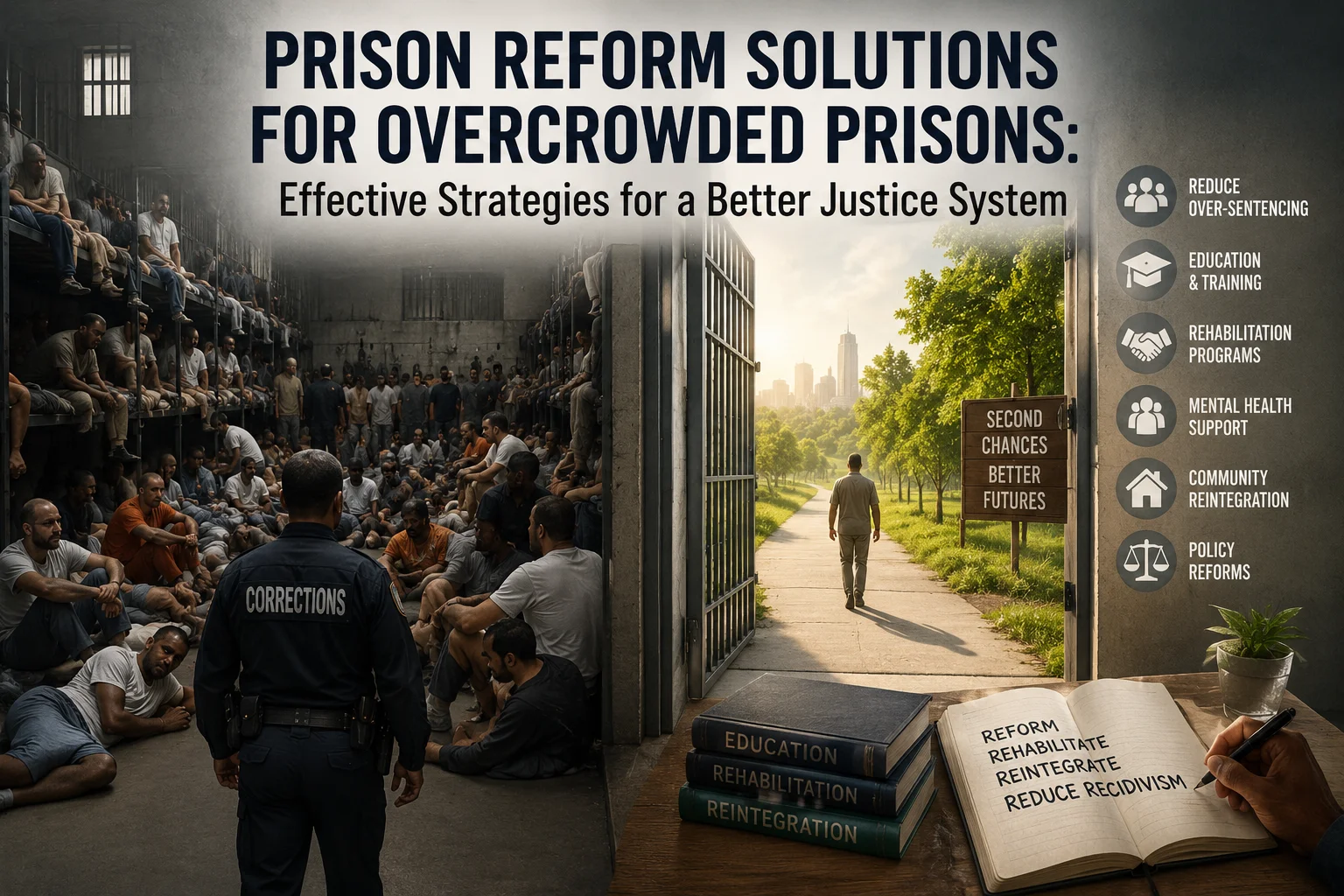
Prison Reform Solutions for Overcrowded Prisons
Table of Contents
Introduction
Prison overcrowding has become one of the biggest challenges facing correctional systems around the world. When prisons operate beyond their intended capacity, it becomes difficult to provide adequate healthcare, education, rehabilitation services, and safe living conditions. Overcrowding can also increase violence, strain prison staff, and limit opportunities for successful rehabilitation. Studies and policy experts consistently note that overcrowding reduces access to educational and vocational programs while making rehabilitation more difficult.
Rather than relying solely on building more prisons, many criminal justice experts support prison reform solutions that address the root causes of overcrowding while improving public safety and reducing recidivism.
What Causes Prison Overcrowding?
Prison overcrowding is often caused by several factors working together, including:
- High rates of incarceration
- Long prison sentences
- Excessive use of pretrial detention
- Limited alternatives to incarceration
- High recidivism rates
- Delays in the judicial process
Research shows that overcrowding is frequently linked to policy choices, sentencing practices, and overreliance on incarceration rather than simply increases in crime.
Sentencing Reform as a Long-Term Solution
One of the most effective prison reform solutions is sentencing reform.
Many experts argue that prison space should be reserved primarily for individuals who pose significant risks to public safety. Community supervision, probation, and alternative sanctions can often be more appropriate for nonviolent offenders. Expanding sentencing alternatives has long been recommended as a strategy for reducing prison overcrowding.
Sentencing reform may include:
- Reducing mandatory minimum sentences
- Expanding probation programs
- Increasing parole opportunities
- Reviewing outdated sentencing laws
- Encouraging community-based supervision
These reforms can help reduce prison populations while maintaining accountability.
Expanding Rehabilitation Programs
Rehabilitation programs play a critical role in reducing overcrowding over time.
When incarcerated individuals receive support and develop skills that help them succeed after release, they are less likely to return to prison.
Effective rehabilitation programs may include:
- Educational courses
- Vocational training
- Life skills development
- Mental health counseling
- Substance abuse treatment
- Job readiness programs
Research indicates that overcrowded facilities often struggle to provide these services, making reform efforts even more important.
Restorative Justice Programs
Restorative justice focuses on repairing harm, promoting accountability, and rebuilding community relationships.
These programs encourage individuals to:
- Accept responsibility for their actions
- Understand the impact of their behavior
- Participate in conflict resolution
- Develop stronger community connections
Restorative justice initiatives can help reduce reliance on incarceration for certain offenses while supporting rehabilitation and long-term public safety. Some policy analyses identify restorative approaches as part of broader solutions to prison overcapacity.
Diversion Programs for Nonviolent Offenders
Diversion programs redirect eligible individuals away from incarceration and toward treatment or community-based services.
Common diversion options include:
- Drug treatment programs
- Mental health courts
- Community supervision
- Educational interventions
- Counseling services
Experts often recommend diverting minor cases from the justice system where appropriate to reduce prison populations and improve outcomes.
Reducing Pretrial Detention
A significant number of people in correctional facilities have not yet been convicted of a crime.
Reducing unnecessary pretrial detention can help alleviate overcrowding by:
- Expanding bail reform initiatives
- Speeding up court proceedings
- Increasing access to legal representation
- Using risk-based assessment tools
Improving judicial efficiency and reducing excessive pretrial detention are frequently cited as key solutions for managing prison populations.
Strengthening Reentry Programs
Many individuals leaving prison face serious challenges, including:
- Unemployment
- Housing instability
- Financial hardship
- Limited support systems
Without assistance, these barriers can increase the likelihood of reoffending.
Strong reentry programs provide:
- Employment assistance
- Housing support
- Mentorship
- Educational opportunities
- Community resources
Successful reintegration reduces recidivism and helps prevent prisons from becoming overcrowded again.
Investing in Mental Health Services
Mental health issues are common within correctional populations.
Prison reform efforts should prioritize:
- Mental health evaluations
- Counseling services
- Crisis intervention programs
- Trauma-informed care
Addressing mental health needs improves outcomes for incarcerated individuals and can reduce future involvement with the criminal justice system.
Community-Based Alternatives to Incarceration
Many experts support community-based alternatives that maintain accountability while avoiding unnecessary incarceration.
Examples include:
- Probation
- Electronic monitoring
- Community service
- Treatment programs
- Restorative justice initiatives
Policy organizations frequently recommend noncustodial measures as an important tool for reducing overcrowding while preserving public safety.
Internal Link
If you’re interested in alternative approaches to justice and rehabilitation, read our guide on Restorative Justice Programs for Oakland Youth Success and Impact, which explores how community-focused programs help reduce crime and support positive outcomes after involvement with the justice system.
Why Overcrowding Hurts Public Safety
Some people assume that simply increasing incarceration automatically improves public safety. However, severe overcrowding can create additional problems, including:
- Reduced access to rehabilitation
- Increased violence inside facilities
- Limited educational opportunities
- Greater strain on correctional staff
- Higher recidivism rates
Correctional experts and inspectors have repeatedly warned that overcrowded facilities make meaningful rehabilitation much harder to achieve.
The Future of Prison Reform
Modern prison reform is increasingly focused on balancing accountability with rehabilitation.
Future reforms may include:
- Expanded diversion programs
- Increased parole opportunities
- Greater investment in education
- Stronger reentry services
- Improved mental health treatment
- Enhanced community-based supervision
The goal is not simply to reduce prison populations but to create a more effective justice system that improves public safety and reduces repeat offending.
Conclusion
Prison overcrowding is a complex challenge that cannot be solved through prison construction alone. Effective prison reform solutions focus on reducing recidivism, improving rehabilitation, expanding alternatives to incarceration, strengthening reentry programs, and addressing the root causes of criminal behavior.
By investing in evidence-based reforms, communities can reduce overcrowding, improve public safety, and create correctional systems that better support rehabilitation and successful reintegration into society.
FAQs
What is prison overcrowding?
Prison overcrowding occurs when correctional facilities hold more inmates than their intended capacity.
Why is prison overcrowding a problem?
Overcrowding can reduce access to rehabilitation programs, increase violence, strain resources, and create unsafe living conditions.
How can prison reform reduce overcrowding?
Prison reform can reduce overcrowding through sentencing reform, diversion programs, rehabilitation services, parole expansion, and alternatives to incarceration.
What are diversion programs?
Diversion programs redirect eligible individuals away from prison and toward treatment, counseling, education, or community supervision.
How do rehabilitation programs help reduce prison populations?
Rehabilitation programs help individuals develop skills and support systems that reduce the likelihood of reoffending after release.
What role does restorative justice play in prison reform?
Restorative justice promotes accountability, healing, and community engagement while providing alternatives to traditional incarceration for certain cases.
Can reducing overcrowding improve public safety?
Yes. Reducing overcrowding can improve rehabilitation opportunities, lower recidivism rates, and help correctional systems operate more effectively.
