Evidence-Based Prison Reform Programs That Work in the United States
Table of Contents
Introduction
Prison reform has become a central issue in discussions about public safety, rehabilitation, and criminal justice policy. For decades, policymakers and correctional leaders have searched for effective ways to reduce recidivism, improve rehabilitation outcomes, and help formerly incarcerated individuals successfully reintegrate into society.
While many prison reform ideas have been proposed, not all programs produce measurable results. This has increased interest in evidence-based prison reform programs—initiatives supported by research, data, and proven outcomes.
Evidence-based prison reform focuses on strategies that have demonstrated success in reducing repeat offending, improving educational achievement, increasing employment opportunities, and strengthening community reintegration. Rather than relying on assumptions, these programs use measurable results to determine what works and what does not.
As correctional systems continue evolving, evidence-based prison reform programs are becoming increasingly important for creating safer communities and improving long-term outcomes for individuals leaving prison.
What Are Evidence-Based Prison Reform Programs?
Evidence-based prison reform programs are initiatives that rely on research and measurable outcomes to improve correctional systems.
These programs are designed to:
- Reduce recidivism
- Improve rehabilitation outcomes
- Increase educational achievement
- Support successful reentry
- Strengthen public safety
- Address underlying causes of criminal behavior
Unlike programs based solely on theory, evidence-based initiatives are evaluated using data to determine their effectiveness.
Correctional agencies often use research findings to identify programs that consistently produce positive results and expand those approaches throughout the system.
Why Evidence Matters in Prison Reform
Prison reform efforts require significant investments of time, resources, and funding. Without evidence, policymakers may struggle to determine whether a program is truly effective.
Evidence-based approaches help decision-makers:
- Identify successful programs
- Allocate resources efficiently
- Improve correctional outcomes
- Reduce prison populations through lower recidivism
- Strengthen public confidence in reform efforts
By focusing on proven strategies, correctional systems can maximize the impact of rehabilitation initiatives.
Education Programs That Reduce Recidivism
Education remains one of the most effective prison reform programs available today.
Research consistently shows that individuals who participate in educational programs while incarcerated are less likely to return to prison after release.
GED and Literacy Programs
Many incarcerated individuals enter correctional facilities with limited educational backgrounds.
GED preparation and literacy programs help participants:
- Improve reading and writing skills
- Increase confidence
- Prepare for employment
- Continue higher education opportunities
These foundational programs often serve as the first step toward successful rehabilitation.
College Education Programs
College courses offered within correctional facilities have gained attention as effective prison reform initiatives.
Benefits include:
- Improved critical thinking skills
- Higher employment potential
- Greater earning opportunities
- Reduced recidivism
Educational achievement helps individuals build a foundation for long-term success after release.
Vocational Training Programs That Produce Results
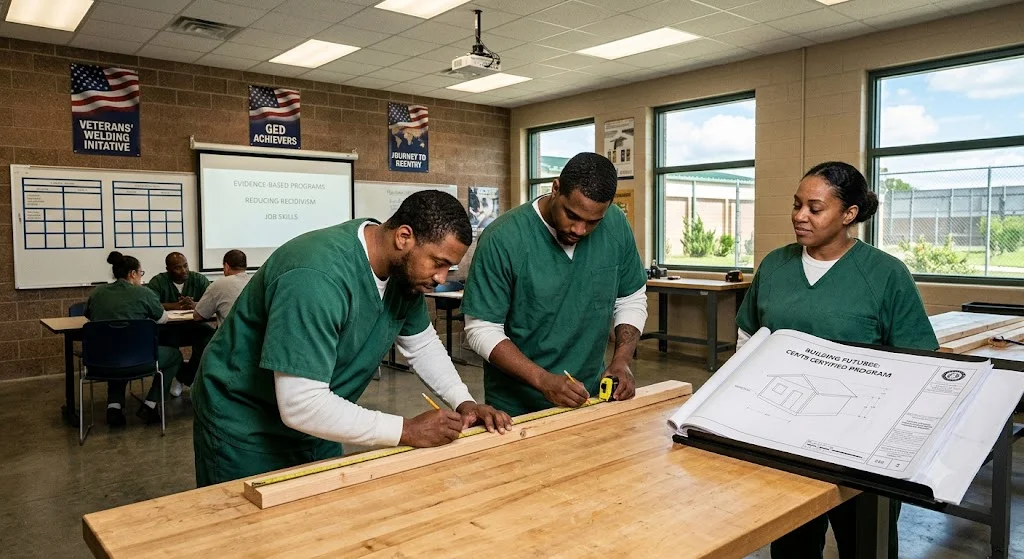
Vocational training is another evidence-based prison reform strategy that consistently delivers positive outcomes.
These programs provide practical skills that prepare individuals for employment after incarceration.
Skilled Trade Certifications
Many correctional facilities offer certifications in:
- Welding
- Carpentry
- Construction
- Plumbing
- Electrical work
- Manufacturing
These industries often provide stable employment opportunities for individuals with the necessary training.
Workforce Development Programs
Workforce development initiatives teach:
- Resume preparation
- Interview skills
- Workplace communication
- Financial literacy
- Professional development
Employment is one of the strongest predictors of successful reintegration, making vocational training a critical component of prison reform.
Mental Health Treatment Programs
Mental health services have become a major focus of evidence-based prison reform.
Many incarcerated individuals struggle with:
- Depression
- Anxiety
- Trauma
- Post-traumatic stress
- Behavioral health disorders
Without treatment, these challenges can continue affecting decision-making and behavior after release.
Counseling and Therapy Services
Professional counseling helps individuals:
- Manage emotional challenges
- Develop healthy coping mechanisms
- Improve communication skills
- Address trauma
Mental health treatment supports rehabilitation while reducing factors associated with repeat offending.
Trauma-Informed Care
Trauma-informed approaches recognize that many incarcerated individuals have experienced significant adversity.
These programs focus on understanding trauma’s impact and helping participants develop healthier responses to stress and conflict.
Substance Abuse Recovery Programs
Substance abuse is often linked to criminal behavior and incarceration.
Evidence-based recovery programs provide:
- Addiction treatment
- Recovery counseling
- Group support sessions
- Relapse prevention education
Addressing substance abuse challenges can significantly improve reentry outcomes and reduce recidivism.
Many correctional experts consider addiction treatment one of the most important prison reform investments available.
Cognitive Behavioral Therapy in Correctional Facilities
Cognitive Behavioral Therapy (CBT) is widely recognized as one of the most effective evidence-based prison reform programs.
CBT helps participants:
- Identify harmful thought patterns
- Improve decision-making
- Develop problem-solving skills
- Manage emotions effectively
Research has shown that CBT programs can reduce criminal behavior and support long-term rehabilitation.
Because of its effectiveness, many correctional systems have incorporated CBT into rehabilitation programs.
Reentry Programs That Support Successful Reintegration
Successful reintegration is one of the primary goals of prison reform.
Reentry programs help individuals transition from incarceration back into society.
Employment Assistance
Many reentry programs provide:
- Job placement support
- Career counseling
- Employer partnerships
- Workforce training
Stable employment reduces financial stress and supports successful reintegration.
Housing Assistance
Housing instability is one of the biggest challenges former inmates face.
Effective prison reform programs often include:
- Transitional housing
- Rental assistance
- Community-based housing support
Stable housing creates a foundation for long-term success.
Community Mentorship Programs
Mentorship initiatives connect formerly incarcerated individuals with community members who provide guidance, encouragement, and support.
Strong support networks can improve confidence and reduce the risk of reoffending.
Restorative Justice Programs
Restorative justice programs focus on accountability, healing, and repairing harm.
These initiatives encourage participants to:
- Understand the consequences of their actions
- Take responsibility
- Develop empathy
- Strengthen community relationships
Restorative justice programs have shown promising results in supporting rehabilitation and reducing future criminal behavior.
Community-Based Alternatives to Incarceration
Evidence-based prison reform also includes alternatives to incarceration for appropriate cases.
Examples include:
- Drug treatment courts
- Mental health diversion programs
- Community supervision
- Probation programs
- Restorative justice initiatives
These alternatives can reduce prison overcrowding while providing treatment and accountability.
Why Some Prison Reform Programs Fail
Not every prison reform initiative succeeds.
Common reasons for failure include:
- Insufficient funding
- Poor implementation
- Lack of staff training
- Limited program access
- Inadequate follow-up support
Evidence-based programs succeed because they are regularly evaluated and improved based on measurable outcomes.
Key Features of Successful Prison Reform Programs
Effective prison reform programs typically share several characteristics:
- Clear goals
- Research-based design
- Qualified staff
- Individualized support
- Ongoing evaluation
- Strong reentry planning
Programs that combine multiple services often produce the best outcomes. For a closer look at specific approaches, see how education programs in prison reform reduce recidivism, explore broader prison reform programs in the United States, and learn about prison reform systems built around second chances.
nn
You can also read how prison reform initiatives are helping former inmates rebuild their lives, and why modern correctional reform matters for public safety.
The Historical Foundation of Prison Reform
Modern prison reform did not emerge overnight. Many of today’s rehabilitation-focused policies can be traced back to early reform movements that challenged harsh prison conditions and promoted the idea that correctional institutions should help individuals improve their lives rather than simply punish them.
As discussed in our article, “What Did Reformers Commonly Believe About Prisons and Asylums?”, early reformers believed that structured environments, education, moral guidance, and rehabilitation could help individuals become productive members of society. These ideas continue to influence modern prison reform efforts, particularly educational programs designed to reduce recidivism and support successful reintegration.
By understanding the historical roots of prison reform, it becomes easier to see why education remains one of the most effective tools for helping incarcerated individuals build better futures.
The Future of Evidence-Based Prison Reform
The future of prison reform will likely continue emphasizing research, accountability, and measurable outcomes.
Future priorities may include:
- Expanded educational opportunities
- Increased mental health treatment
- Technology-assisted learning
- Stronger reentry services
- Enhanced workforce development programs
As correctional systems continue adopting evidence-based approaches, prison reform efforts may become more effective at reducing recidivism and improving community safety.
Conclusion
Evidence-based prison reform programs provide a practical and effective approach to improving correctional outcomes. By focusing on proven strategies such as education, vocational training, mental health treatment, substance abuse recovery, cognitive behavioral therapy, and reentry support, correctional systems can help individuals successfully rebuild their lives after incarceration.
These programs not only benefit formerly incarcerated individuals but also contribute to safer communities by reducing recidivism and promoting long-term rehabilitation. As research continues to identify successful correctional practices, evidence-based prison reform will remain a critical part of modern criminal justice policy.
Frequently Asked Questions
What is an evidence-based prison reform program?
An evidence-based prison reform program is a correctional initiative supported by research and measurable outcomes that demonstrate effectiveness in reducing recidivism and improving rehabilitation.
Which prison reform programs are most effective?
Education programs, vocational training, cognitive behavioral therapy, mental health treatment, substance abuse recovery programs, and reentry services are among the most effective prison reform strategies.
How does education support prison reform?
Education improves skills, employment opportunities, and long-term rehabilitation outcomes while reducing the likelihood of reoffending.
Why are reentry programs important?
Reentry programs help individuals secure housing, employment, healthcare, and community support after release from prison.
What role does mental health treatment play in prison reform?
Mental health treatment addresses underlying psychological challenges and supports successful rehabilitation.
Can prison reform improve public safety?
Yes. Effective prison reform programs reduce recidivism, strengthen rehabilitation outcomes, and help formerly incarcerated individuals successfully reintegrate into society