The Role of Education Programs in Modern Prison Reform
Table of Contents
Introduction
Education programs in prison reform are one of the most effective and often overlooked tools for change. When people think about prison reform, they usually focus on sentencing laws, prison conditions, or public safety policies. While these issues matter, education remains central to building lasting change.
Education has the power to change lives. It provides knowledge, develops skills, builds confidence, and creates opportunities that may not have existed before. For incarcerated individuals, education can serve as a pathway toward personal growth, rehabilitation, and successful reintegration into society.
Over the past several decades, correctional systems across the United States have increasingly recognized the value of educational opportunities inside prisons. Modern prison reform efforts frequently include literacy programs, GED preparation, vocational training, college courses, and workforce development initiatives designed to help individuals prepare for life after release.
By investing in education, correctional systems can address many of the underlying challenges associated with crime, reduce recidivism, and improve long-term public safety.
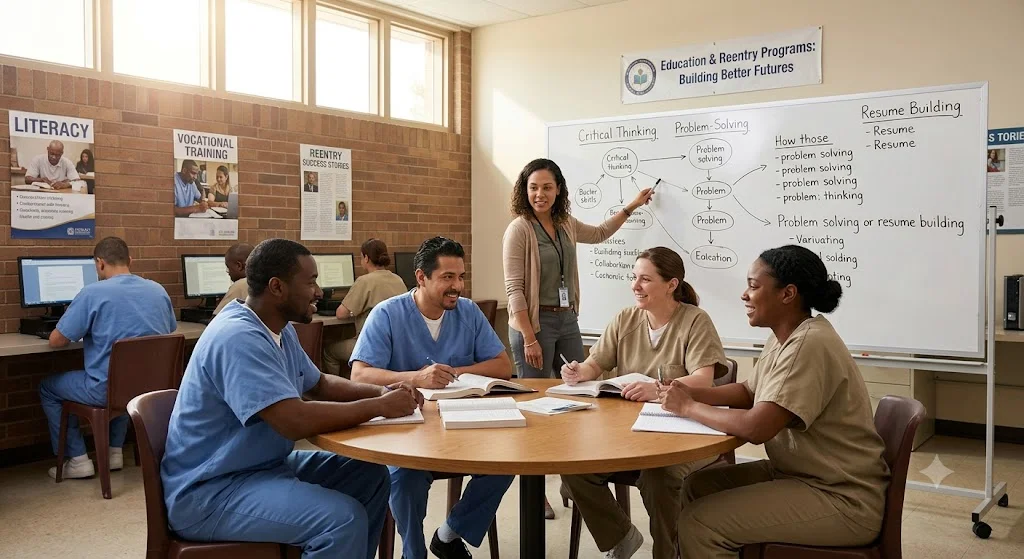
Why Education Programs in Prison Reform Matter
Modern prison reform is based on the idea that correctional systems should do more than simply punish individuals. Effective correctional policies aim to prepare people for successful lives after incarceration.
Education plays a central role in this process because it helps individuals develop the tools they need to make positive changes.
For many incarcerated individuals, educational opportunities were limited before entering prison. Some may have left school early, struggled with literacy, or lacked access to higher education. Prison education programs help address these gaps while providing opportunities for personal and professional development.
Education can improve:
- Reading and writing skills
- Critical thinking abilities
- Communication skills
- Problem-solving capabilities
- Employment readiness
- Self-confidence
These improvements can significantly influence a person’s ability to succeed after release.
The Connection Between Education and Rehabilitation
Rehabilitation is one of the primary goals of prison reform.
Education supports rehabilitation by encouraging individuals to develop new perspectives, set meaningful goals, and build productive habits.
Many incarcerated individuals describe education as a turning point in their lives. Learning can create a sense of purpose and achievement that motivates people to pursue positive opportunities.
Rather than focusing solely on past mistakes, education encourages participants to concentrate on future possibilities.
This shift in mindset is one reason why education has become such an important component of rehabilitation-focused prison reform programs.
Reducing Recidivism Through Education
One of the strongest arguments for prison education programs is their potential to reduce recidivism.
Recidivism occurs when individuals return to criminal behavior after release from prison.
Reducing recidivism benefits everyone because it:
- Improves public safety
- Lowers correctional costs
- Reduces prison overcrowding
- Strengthens communities
- Supports family stability
Education helps reduce recidivism by increasing opportunities for employment, improving decision-making skills, and encouraging long-term goal setting.
Individuals who leave prison with educational credentials often have more options available to them, making successful reintegration more achievable.
Literacy Programs as a Foundation for Success
Literacy is one of the most important educational needs within correctional facilities.
Many incarcerated individuals enter prison with limited reading and writing skills. These challenges can affect employment opportunities, communication abilities, and everyday functioning.
Literacy programs help participants:
- Improve reading comprehension
- Strengthen writing skills
- Build confidence
- Prepare for further education
Strong literacy skills provide the foundation needed for vocational training, college courses, and career development.
GED and High School Equivalency Programs
GED programs remain among the most common educational opportunities available in correctional facilities.
Earning a high school equivalency credential can significantly improve future prospects.
Benefits of GED completion include:
- Increased employability
- Higher earning potential
- Better access to vocational programs
- Eligibility for higher education opportunities
For many individuals, obtaining a GED while incarcerated represents an important milestone and a major step toward rehabilitation.
College Education Behind Bars
College education has become an increasingly important topic in prison reform discussions.
Many correctional systems now partner with colleges and universities to offer academic courses within correctional facilities.
College education provides numerous benefits:
- Improved critical thinking skills
- Greater self-discipline
- Enhanced career opportunities
- Increased confidence
- Personal growth
Higher education also encourages participants to envision futures that extend beyond incarceration.
For many students, earning college credits or degrees while incarcerated becomes a powerful symbol of transformation and commitment to change.
Vocational Training and Career Development
While academic education is important, vocational training is equally valuable within modern prison reform initiatives.
Vocational programs teach practical skills that can lead directly to employment opportunities after release.
Common training areas include:
- Construction
- Welding
- Carpentry
- Plumbing
- Culinary arts
- Manufacturing
- Computer technology
- Electrical work
These programs help participants gain marketable skills while preparing for careers that offer long-term stability.
Employment remains one of the strongest predictors of successful reintegration, making vocational training a key component of prison reform.
Education and Employment Opportunities
Finding stable employment after release can be challenging.
Formerly incarcerated individuals often face barriers such as:
- Gaps in employment history
- Limited work experience
- Social stigma
- Restricted professional opportunities
Education helps overcome many of these obstacles by providing credentials, certifications, and valuable skills.
Employers are often more willing to consider candidates who demonstrate a commitment to personal growth and professional development.
As a result, prison education programs contribute directly to employment readiness and long-term success.
Supporting Successful Reentry
Reentry refers to the transition from incarceration back into society.
This period can be difficult because individuals must navigate employment, housing, healthcare, and family responsibilities.
Education supports successful reentry by helping individuals:
- Build confidence
- Improve communication skills
- Develop career goals
- Access employment opportunities
- Make informed decisions
Many prison reform advocates view education as one of the most effective ways to prepare individuals for life after release.
Challenges Facing Prison Education Programs
Despite their benefits, prison education programs face several challenges.
These may include:
- Limited funding
- Staff shortages
- Security restrictions
- Technology limitations
- Inconsistent program availability
Addressing these challenges remains an important priority for prison reform advocates.
Expanding access to educational opportunities could allow more incarcerated individuals to benefit from rehabilitation-focused initiatives.
Why Education Benefits Society
The benefits of prison education extend far beyond correctional facilities.
When formerly incarcerated individuals successfully reintegrate into society, communities often experience:
- Lower crime rates
- Reduced correctional spending
- Stronger local economies
- Increased workforce participation
- Improved family stability
These outcomes demonstrate why education continues to play a vital role in modern prison reform efforts.
Related Prison Reform Reading
Education is just one piece of the broader prison reform movement. For a deeper look at how these efforts connect, explore prison reform programs in the United States, see which evidence-based prison reform programs are proving effective, and read about prison reform systems built around second chances.
You can also learn how prison reform initiatives are helping former inmates rebuild their lives, and why modern correctional reform matters for public safety.
The Future of Education Programs in Prison Reform
As correctional systems continue evolving, education will likely remain a cornerstone of prison reform efforts.
Future developments may include:
- Expanded college access
- Online learning opportunities
- Digital literacy programs
- Industry-recognized certifications
- Stronger partnerships with employers
These initiatives can help ensure that more individuals leave prison with the knowledge and skills needed for successful reintegration.
The Historical Foundation of Prison Reform
Modern prison reform did not emerge overnight. Many of today’s rehabilitation-focused policies can be traced back to early reform movements that challenged harsh prison conditions and promoted the idea that correctional institutions should help individuals improve their lives rather than simply punish them.
As discussed in our article, “What Did Reformers Commonly Believe About Prisons and Asylums?”, early reformers believed that structured environments, education, moral guidance, and rehabilitation could help individuals become productive members of society. These ideas continue to influence modern prison reform efforts, particularly educational programs designed to reduce recidivism and support successful reintegration.
By understanding the historical roots of prison reform, it becomes easier to see why education remains one of the most effective tools for helping incarcerated individuals build better futures.
Conclusion
Education programs play a critical role in modern prison reform. From literacy instruction and GED preparation to college education and vocational training, these programs provide opportunities for personal growth, rehabilitation, and long-term success.
By helping incarcerated individuals develop valuable skills and prepare for life after release, education contributes to reduced recidivism, stronger communities, and improved public safety. As policymakers continue exploring effective prison reform strategies, expanding access to educational opportunities remains one of the most promising investments in rehabilitation and second chances.
Frequently Asked Questions
Why are education programs important in prison reform?
Education programs help incarcerated individuals develop skills, improve employment opportunities, and reduce the likelihood of reoffending.
Can prison education programs reduce recidivism?
Many studies have found that educational participation is associated with lower recidivism rates and better post-release outcomes.
What types of education are offered in prisons?
Programs may include literacy classes, GED preparation, vocational training, college courses, and career development opportunities.
How does vocational training support prison reform?
Vocational training teaches practical job skills that help individuals find employment after release and support successful reintegration.
Do prison education programs improve public safety?
Yes. By reducing recidivism and supporting rehabilitation, education programs can contribute to safer communities.
What is the future of education in prison reform?
Future efforts will likely focus on expanding educational access, technology-based learning, workforce development, and higher education opportunities within correctional facilities.