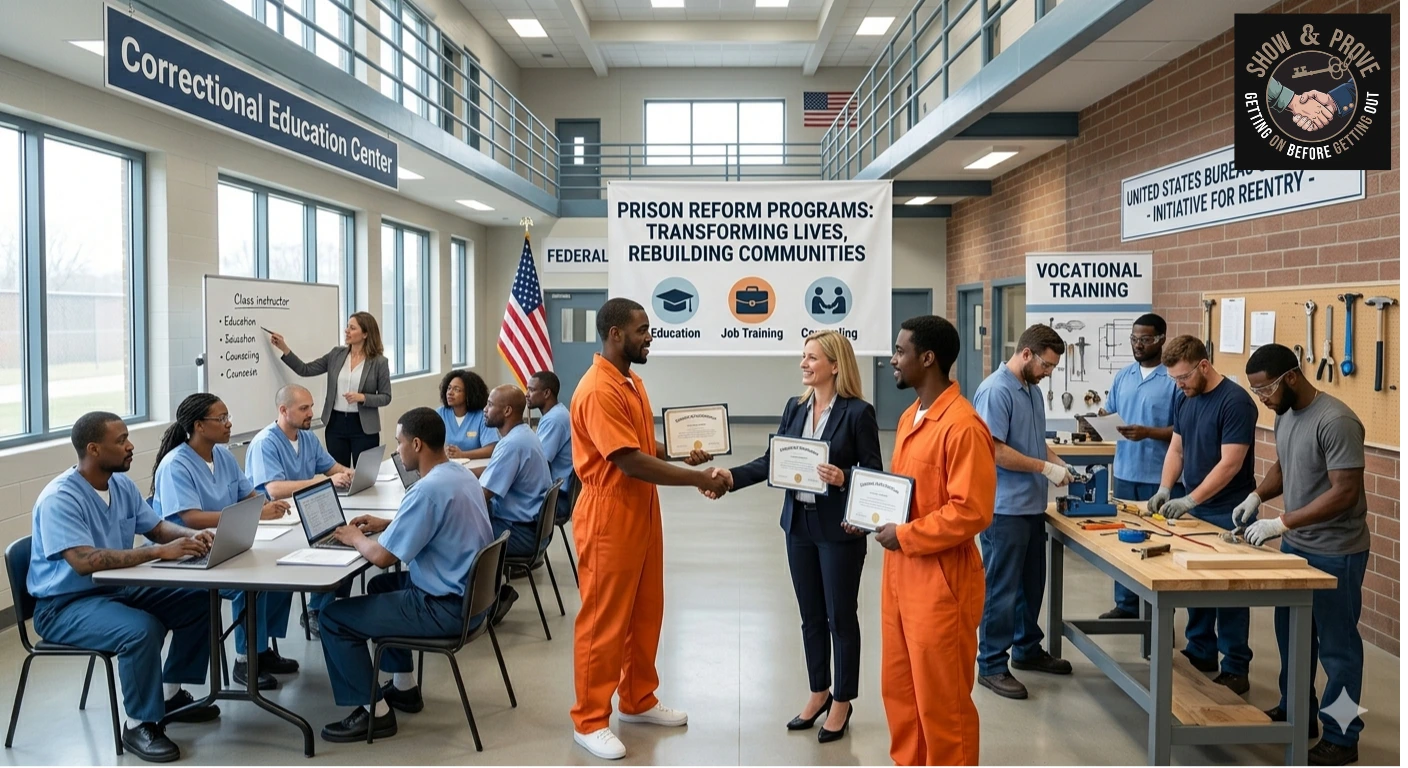
Finding work after prison is the single biggest factor in whether someone stays out. It is also the barrier most people are least prepared for. This guide covers the programs that exist, the rights you have, and what actually works in an interview when you have a record.
Key Takeaways
- Employment is the strongest predictor of successful reentry — and the first year after release is when risk is highest.
- Three federal programs exist specifically to lower employer risk: the Federal Bonding Program, the Work Opportunity Tax Credit, and Ban the Box hiring rules.
- Most employers and most applicants do not know these programs exist. Knowing them is an advantage.
- People who took part in prison education were 13% more likely to be employed after release (RAND Corporation).
- Licensing rules, not employer prejudice, block many trades — check your state before training for one.
Why Employment Decides Reentry
Bureau of Justice Statistics data following people released from state prisons found that 66% were rearrested within three years, but the annual arrest rate fell sharply over time — from 43% in year one to 22% by year ten (Bureau of Justice Statistics). Risk is concentrated at the start, and income is what carries people through that window.
Work provides more than money. It provides structure, an address, a reference, a reason to be somewhere at a fixed time, and a route back into ordinary life. Reentry plans that solve housing but not income tend to fail within months.
Ban the Box: What It Does and Does Not Do
Ban the Box policies remove the criminal history checkbox from the initial job application. Many states and cities have adopted them, and they apply to public employers in more places than private ones.
What it does: delays the record question until later in hiring, so you are assessed on qualifications first and get the chance to explain in person.
What it does not do: it does not prevent background checks, and it does not stop an employer declining you once the record surfaces. It buys you a conversation, not a job. Rules vary by state and city — check what applies where you are applying.
The Federal Bonding Program
The Federal Bonding Program provides employers with fidelity bonding — insurance protecting against employee theft or dishonesty — at no cost to the employer or the worker. It exists specifically to remove the risk objection employers raise about hiring people with records.
Bonds are typically arranged through state workforce agencies. The practical value is that it gives you something concrete to offer in an interview: you are not asking the employer to absorb a risk, you are pointing to a program that covers it.
The Work Opportunity Tax Credit (WOTC)
WOTC is a federal tax credit for employers who hire people from groups that face barriers to employment, including people with felony convictions hired within a set window after conviction or release.
The credit is claimed by the employer, and certification is handled through the state workforce agency using IRS and Department of Labor forms. Many small employers have never heard of it. Mentioning it turns your record from a liability into a financial incentive — which is a very different conversation.
Occupational Licensing: The Barrier Nobody Warns You About
This is the most common avoidable mistake in reentry planning. Someone trains for a trade inside, comes home, and discovers the state licensing board can deny a licence based on their conviction.
Licensing rules vary enormously by state and by trade. Some boards consider only convictions directly related to the work. Others have blanket bars. Many allow you to request a determination before you invest years in training — which is worth doing first, not last.
Practical step: before enrolling in any training programme, contact the relevant state licensing board and ask whether your conviction affects eligibility, and whether a pre-determination is available.
Sectors That Hire Most Readily
These vary regionally, but the pattern is consistent: industries with labour shortages, physical work, and fewer licensing requirements are the most open.
- Construction and skilled trades — welding, framing, roofing, HVAC. Persistent labour shortages.
- Manufacturing and warehousing — often structured hiring with clear criteria.
- Commercial driving — strong demand, though CDL eligibility depends on the offence.
- Food service and hospitality — high turnover, lower barriers, a route to a reference.
- Landscaping and facilities — frequently second-chance friendly.
A first job after release does not have to be the destination. Its job is to produce income, a reference and a work history — the three things that make the second job easier to get.
How to Handle the Record in an Interview
The record will come up. Being prepared for it changes the outcome more than anything else in the conversation.
- Disclose before the background check does. Being told by a report is worse than being told by you.
- Be brief and factual. Name the offence, the year, and that you served the sentence. Do not narrate the whole story.
- Move quickly to what changed. Programmes completed, training, certifications, time since. This is the part that matters to an employer.
- Do not minimise or blame. Accountability reads as reliability. Excuses read as risk.
- Bring the incentives. Mention the Federal Bonding Program and WOTC. It reframes the discussion from character to logistics.
- Have a reference ready — a programme supervisor, instructor or mentor who can speak to your work.
Clearing or Sealing Your Record
Depending on the offence and your state, expungement or sealing may be available — which can remove the question entirely for many jobs. Eligibility rules and waiting periods vary widely. See our guide on how to expunge a criminal record.
Preparing Before Release
- Secure identification documents — without ID, nothing else proceeds
- Complete any available vocational certification while inside
- Request copies of programme completion records to use as evidence
- Identify the state workforce agency office nearest to your release address
- Line up one reference who can speak to your work, not just your character
More on this in our guide to preparing for life after prison while still incarcerated.
Frequently Asked Questions
What jobs can felons get?
Construction and skilled trades, manufacturing, warehousing, commercial driving, food service, landscaping and facilities work are the most accessible. The binding constraint is usually state occupational licensing rules rather than employer attitudes.
Do I have to tell an employer about my conviction?
If asked directly, yes — lying is grounds for dismissal later. Ban the Box rules in many states delay when the question can be asked, but they do not remove it. Disclosing before the background check is generally better than being discovered by it.
What is the Federal Bonding Program?
A federal programme providing employers with free fidelity bonding — insurance against employee theft or dishonesty — when hiring people considered at-risk, including those with criminal records. It is usually arranged through state workforce agencies.
Does prison education help with employment?
Yes. RAND Corporation research found participants in correctional education were 13% more likely to be employed after release and 43% less likely to reoffend.
Sources & Further Reading
- Bureau of Justice Statistics — Recidivism of Prisoners Released in 24 States in 2008
- RAND Corporation — Education and Vocational Training in Prisons Reduces Recidivism, Improves Job Outlook
- US Department of Labor — Federal Bonding Program
- US Department of Labor — Work Opportunity Tax Credit
Programme rules and eligibility vary by state and change over time. Confirm current details with your state workforce agency. Last reviewed August 2026.
Part of our complete guide to prison reform. See also prisoner reentry programs.
See also: find your state reentry contacts.