Prison Education Programs: Building Skills for Successful Reentry
Table of Contents
Prison education programs give people in prison the chance to learn, build new skills, and prepare for life after release. These programs support rehabilitation, help lower recidivism, and improve job prospects, helping people become productive members of society.
Education has always been a powerful tool for personal growth. Inside prison, education can close learning gaps, build self-confidence, and create paths to long-term success. Many people enter prison with little formal schooling, so access to good education is a key part of rehabilitation.
As part of wider prison reform efforts, education programs are now seen as an investment in public safety and community well-being. By helping people gain knowledge, qualifications, and practical skills, prisons can support successful reentry and lower the chance of reoffending.
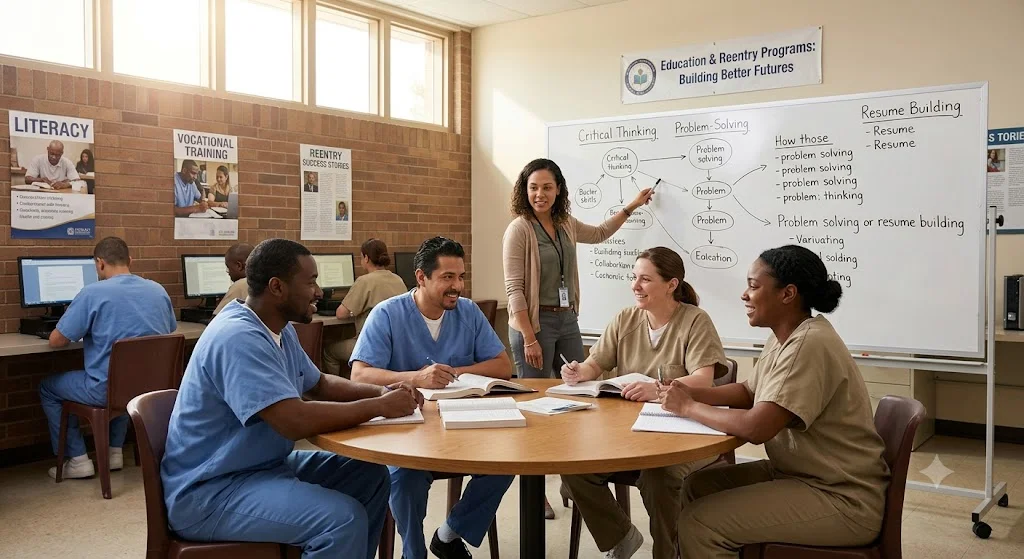
What Are Prison Education Programs?
Prison education programs are structured learning opportunities offered inside correctional facilities. They aim to improve academic skills, offer vocational training, and support personal growth for people in prison.
Programs vary by facility, available resources, and each participant’s needs. Some focus on basic reading and math. Others offer high school equivalency courses, vocational certificates, college education, or specialized job training.
The main goal of prison education is to help people gain knowledge and skills that improve their chances after release. Education supports employment, and it also builds critical thinking, communication, problem-solving, and personal responsibility.
Many prison systems see education as a cornerstone of rehabilitation because it removes one of the biggest barriers to successful reentry: limited access to learning and career opportunities.
Why Are Prison Education Programs Important?
Prison education programs matter because they help people build the skills needed for successful reentry into society. Education can improve job prospects, build self-confidence, and lower the risk of reoffending.
Many people enter prison already at an educational disadvantage. Some left school early, struggled with learning, or never had access to good resources. Prison education programs give them a chance to overcome these challenges and grow.
Education also makes prisons safer. People who take part in classes tend to stay focused on positive, long-term goals. This can improve behavior inside facilities while supporting rehabilitation.
Communities benefit too. When people return home with better skills and qualifications, they’re better equipped to find jobs, support their families, and contribute to society.
Education as a Tool for Rehabilitation
Education is one of the most effective rehabilitation tools in the correctional system. Learning encourages personal growth, builds responsibility, and gives people the knowledge to make informed decisions.
Education programs help build essential skills for both personal life and work. Reading, writing, math, communication, and critical thinking are all valuable assets for long-term success.
Beyond academics, education can boost self-esteem and motivation. Many participants say they feel a greater sense of purpose and achievement after completing a program while in prison.
Because education meets both practical and personal needs, it stays a central part of rehabilitation strategies in modern correctional systems.
The Connection Between Education and Recidivism Reduction
Reducing recidivism is one of the main goals of prison education. People who gain qualifications and job skills often have better opportunities after release, which lowers the chance of reoffending.
Education can improve employability, raise earning potential, and open up more career options. These factors add stability and can help people avoid situations that raise the risk of reoffending.
For this reason, prison education is often part of broader rehabilitation and reentry strategies aimed at improving public safety and supporting successful reentry.
Types of Prison Education Programs
Prison education comes in many forms, so people can choose learning options that match their background, career goals, and personal needs. As outlined in our overview of education programs in modern prison reform, correctional systems often offer a range of options to support rehabilitation and reentry.
These programs can include basic literacy classes, high school equivalency courses, college-level education, vocational training, and technology courses. Together, they create paths for skill-building and lifelong learning.
By offering multiple options, facilities can better serve a wide range of people and help them prepare for jobs, further study, and active participation in society after release.
Adult Basic Education
Adult Basic Education (ABE) programs help people build core academic skills like reading, writing, math, and communication. These programs matter most for people who had limited access to education before entering prison.
Many participants start with reading and math instruction that builds confidence and helps them succeed in other programs later. Strong basic skills matter for career growth, personal development, and everyday life.
ABE programs are often the first step in a longer educational path. After finishing, participants may move on to high school equivalency programs, vocational training, or college.
Improving basic skills can shape a person’s future by opening up more job opportunities and supporting a successful reentry after release.
High School Equivalency Programs
High school equivalency programs let people earn a credential equal to a traditional diploma. They help participants build academic knowledge while meeting the requirements many employers and training programs expect.
For people who didn’t finish high school, earning this credential is a real achievement. It shows commitment, perseverance, and readiness for more education or career opportunities.
These programs typically cover math, science, social studies, language arts, and critical thinking. Participants get instruction and support to help them prepare for exams and succeed.
Earning this credential can improve job prospects and open doors to vocational training, college, and other opportunities for growth.
College Education in Prisons
College education programs let people pursue higher education while serving their sentence. Depending on the system and its partnerships, participants may access certificate programs, associate degrees, bachelor’s degrees, or specialized courses.
Higher education builds advanced knowledge, critical thinking, communication skills, and professional abilities. College programs can also build confidence and help people set long-term academic and career goals.
Many prisons partner with colleges, universities, and educational organizations to expand access to higher education. These partnerships help ensure students get quality instruction and recognized credentials.
College education has become an increasingly important part of prison education because it supports employment, personal growth, and successful reentry.
Vocational and Technical Training
Vocational and technical training programs build practical skills that match workforce needs. They prepare participants for careers in skilled trades, technical jobs, and specific industries.
Training can include construction, welding, electrical work, plumbing, auto repair, manufacturing, culinary arts, computer support, and other trades. Participants often get hands-on instruction and can earn certifications employers value.
Vocational training gives people job-ready skills they can use right after release. Employment is one of the biggest factors in successful reentry, which makes workforce prep a critical part of prison education.
By offering practical, industry-relevant training, vocational programs support both rehabilitation and long-term financial stability.
Digital and Technology Skills Programs
As technology reshapes the modern workforce, digital literacy has become an increasingly important part of prison education.
Technology courses may cover computer basics, digital communication, office software, coding concepts, IT support, and other technical skills. These programs build abilities that matter in today’s job market.
Digital literacy helps with employment, and also with everyday tasks like communication, managing money, online learning, and finding community resources. People who understand technology are often better prepared for life after release.
As correctional systems evolve, technology education is expected to play a bigger role in preparing people for future jobs and successful reentry.
Benefits of Prison Education Programs
Prison education programs offer many benefits for participants, prisons, and society as a whole. By helping people gain knowledge, qualifications, and practical skills, these programs support rehabilitation and prepare people for successful lives after release.
Education is often seen as one of the most effective tools for removing barriers to employment, encouraging personal growth, and promoting long-term stability. As a result, prison education has become an essential part of modern correctional systems and wider prison reform efforts.
Improved Employment Opportunities
One of the biggest benefits of prison education is better access to jobs after release. Many employers look for basic qualifications, vocational certificates, or specialized skills when hiring.
Education programs build skills that matter in the workforce. Whether people complete literacy programs, earn high school equivalency credentials, get vocational certificates, or pursue college, these achievements strengthen their job prospects.
Employment plays a critical role in successful reentry. People who find stable jobs after release are better able to support themselves, contribute to their communities, and stay stable long-term.
Prison education helps close skill gaps and gives learners the tools to compete in today’s job market. By increasing employability, these programs support both rehabilitation and financial independence.
Reduced Recidivism
Reducing recidivism is a major goal of prison education. People who take part in education while incarcerated are often better prepared to handle challenges that could otherwise lead to reoffending.
Education can improve decision-making, problem-solving, communication, and self-confidence. These qualities support positive life choices and help people handle challenges after release.
Educational achievement can also open up jobs and career growth, easing the financial pressure that can lead to crime. By addressing these social and economic factors, prison education plays a valuable role in reducing recidivism.
For prisons and communities, lower recidivism rates mean better public safety, lower correctional costs, and stronger outcomes long-term.
Personal Growth and Confidence
Prison education supports personal growth by encouraging people to pursue meaningful goals and expand their knowledge. Learning new skills and hitting educational milestones builds a sense of accomplishment and motivation.
Many participants report higher self-esteem after completing a program. Success in the classroom often builds confidence and encourages people to keep pursuing personal and professional growth.
Education also builds critical thinking, communication, and a love of lifelong learning. These skills help people adapt to change, solve problems, and make informed decisions in both personal and professional life.
Personal growth is an important part of rehabilitation because it supports lasting behavioral change and helps people build a positive vision for the future.
Stronger Communities
The benefits of prison education reach beyond correctional facilities. Communities gain too, when people return home with better education, job skills, and more confidence.
Educated people are more likely to contribute to society through work, civic participation, and family support. Stable jobs and financial independence can strengthen households and reduce reliance on public assistance.
Communities can also see lower crime rates when education helps reduce recidivism. By supporting successful reentry, prison education contributes to safer neighborhoods and stronger local economies.
Investing in education inside correctional systems can produce long-term benefits for individuals, families, employers, and society as a whole.
Challenges Facing Prison Education Programs
Despite their many benefits, prison education programs often face challenges that affect access, quality, and long-term sustainability.
Funding Limitations
Education programs need funding for instructors, materials, classroom space, technology, and admin support. Limited funding can shrink the number of courses available and reduce access for people in prison.
Many prison systems must balance education spending with other priorities, so steady funding stays an ongoing challenge.
Access to Educational Resources
Providing education resources inside prisons can be complex. Access to textbooks, materials, libraries, technology, and equipment varies by facility resources and security rules.
Limited access can hurt program quality and make it harder for participants to reach their educational goals.
Technology and Infrastructure Barriers
Technology plays an increasingly important role in modern education. But correctional facilities often struggle to provide secure access to digital learning tools and online resources.
Security concerns, limited infrastructure, and tight budgets can restrict tech-based learning. As a result, some facilities struggle to offer advanced digital education.
Addressing these barriers matters because technology skills are becoming more valuable in today’s workforce and society.
Prison Education Programs and Prison Reform
Prison education programs are a central part of prison reform efforts. Many modern correctional systems recognize that rehabilitation and education play a big role in reducing recidivism and improving public safety.
Historically, prisons focused mainly on punishment and confinement. But prison reform efforts increasingly emphasize preparing people for successful reentry into society. Education supports this goal by offering opportunities to learn, build skills, and grow personally.
Many prison reform advocates support expanding education because it addresses factors linked to crime, including limited schooling, unemployment, and lack of vocational skills. By investing in education, prisons can create paths toward long-term success and community stability.
Education also fits into broader criminal justice reform goals, which aim to improve outcomes while promoting fairness, accountability, and rehabilitation — an approach backed by research from the Office of Justice Programs.
How Education Supports Successful Reentry
Successful reentry takes more than just leaving prison. People returning to society often face challenges with employment, housing, financial stability, and reintegration. Education can help them handle these challenges more effectively.
Education programs build knowledge, qualifications, and practical skills that improve job opportunities after release. People who earn diplomas, certificates, or vocational credentials often have a wider range of career options.
Education also builds confidence and self-sufficiency. Participants often develop stronger communication skills, better problem-solving, and more motivation to pursue positive goals.
Educational achievements also help people build a sense of purpose and direction. These factors support successful reentry and can reduce the chance of future involvement in crime.
Combined with reentry programs, employment services, and community support, prison education can significantly improve outcomes after release.
Examples of Effective Prison Education Programs
Correctional systems around the world have set up a variety of education programs to support rehabilitation and successful reentry.
Common examples include:
Literacy and Adult Education Programs
These programs focus on improving reading, writing, and math skills for people with limited schooling. Strong basic skills support future learning and career growth.
High School Equivalency Programs
Many facilities offer prep courses that help participants earn a high school equivalency credential. These qualifications can improve job opportunities and support further education.
College Education Programs
Partnerships with colleges and universities let people in prison pursue higher education. Participants may complete certificate programs, associate degrees, or bachelor’s coursework, depending on what’s available.
Vocational Training Initiatives
Vocational programs teach practical skills in fields like construction, welding, culinary arts, auto repair, manufacturing, and IT. These programs help prepare participants for jobs after release.
Technology and Digital Literacy Programs
Some facilities teach computer skills, office software, coding basics, and digital communication. These skills are increasingly valuable in today’s workforce.
Together, these programs show how correctional systems can support rehabilitation while preparing people for successful lives after incarceration.
The Future of Prison Education in Correctional Systems
The future of prison education will likely focus on expanding access, improving program quality, and bringing more technology into the classroom.
Many prison systems are exploring ways to boost participation through partnerships with schools, nonprofits, and workforce development programs. These partnerships can bring more resources and learning opportunities to people in prison.
Technology is expected to play a bigger role too. Secure digital learning platforms, virtual instruction, and tech-based training may expand access while preparing people for modern workplaces.
Future programs may also put more emphasis on career pathways, recognized certifications, and skills that match labor market demand. This can help ensure participants leave prison with qualifications that support long-term success.
As prison reform continues to evolve, education will remain one of the most effective tools for rehabilitation, reducing recidivism, and successful reentry.
Frequently Asked Questions About Prison Education Programs
What Are Prison Education Programs?
Prison education programs are learning opportunities inside correctional facilities that help people improve academic skills, earn qualifications, build job skills, and prepare for successful reentry.
Why Are Prison Education Programs Important?
They matter because they support rehabilitation, improve job opportunities, reduce recidivism, and help people build productive lives after incarceration.
What Types of Education Are Available in Prisons?
Many correctional facilities offer adult basic education, literacy programs, high school equivalency courses, vocational training, college education, and technology skills programs.
How Do Prison Education Programs Reduce Recidivism?
Education helps people gain knowledge, improve decision-making, boost employability, and build skills that support long-term stability — all of which can lower recidivism rates.
Do Prison Education Programs Improve Employment Opportunities?
Yes. Educational qualifications, vocational certificates, and technical skills can improve job prospects and help people compete in the job market after release.
How Do Prison Education Programs Support Reentry?
Prison education supports reentry by preparing people for employment, boosting self-confidence, improving life skills, and helping participants build a foundation for successful reintegration into society.
STAY CONNECTED
Get updates, stories, and opportunities to support the movement.