Table of Contents
Effective prison reform initiatives have become among the most critical topics shaping modern criminal justice reform discussions. Across the United States, policymakers, correctional professionals, advocacy organizations, and community leaders continue searching for proven ways to reduce recidivism, improve rehabilitation, and build safer communities. While incarceration serves an important accountability function, experts broadly agree that successful correctional systems must also prepare people for life after release.
For decades, prison systems focused primarily on punishment. However, research has consistently shown that incarceration alone often fails to address the root causes of criminal behavior. Without access to education, job training, mental health treatment, and structured reentry support, many individuals struggle after release and face a sharply elevated risk of returning to prison.
This reality has driven the development of comprehensive prison reform initiatives designed to help former inmates rebuild their lives. These programs prioritize rehabilitation, skill development, employment opportunities, housing assistance, and community support—with the goal of improving outcomes for formerly incarcerated individuals while strengthening public safety by reducing repeat offenses.
Why Prison Reform Must Continue After Release
Many people assume that prison reform initiatives only address conditions inside correctional facilities. In reality, some of the most impactful prison reform efforts take place after individuals leave prison.
The transition from incarceration back into society is often extremely difficult. Former inmates frequently encounter overlapping challenges that make rebuilding their lives complicated. They may struggle to find employment, secure housing, reconnect with family, access healthcare, or overcome the persistent stigma of a criminal record.
Well-designed prison reform initiatives recognize that successful reintegration is essential for long-term public safety. When individuals receive structured support during reentry, they are significantly more likely to become productive members of society and far less likely to reoffend.
For this reason, modern prison reform initiatives address the entire correctional journey—from incarceration through rehabilitation and into lasting community reintegration.
The Biggest Challenges Former Inmates Face
Understanding the obstacles former inmates face helps clarify why prison reform initiatives are not just beneficial—they are necessary.
Employment Barriers
Securing employment is one of the greatest challenges after incarceration. Many employers remain hesitant to hire individuals with criminal records, even when those applicants possess valuable skills and strong qualifications.
Without stable income, former inmates often struggle to support themselves and their families. Financial instability compounds stress and creates additional barriers to successful reintegration.
Prison reform initiatives tackle this challenge directly through job training programs, career development services, apprenticeships, and strategic partnerships with second-chance employers committed to hiring formerly incarcerated individuals.
Housing Instability
Housing is another critical concern. Many former inmates leave prison without a stable place to live. Some cannot return to previous residences, while others face legal restrictions that further limit available housing options.
Stable housing serves as the foundation for employment, healthcare access, and family reunification. Prison reform initiatives frequently support transitional housing programs and community-based housing assistance to help individuals establish stability after release.
Mental Health Challenges
A significant portion of incarcerated individuals experience mental health conditions including anxiety, depression, trauma, or post-traumatic stress disorder. Without proper treatment, these conditions continue to affect daily functioning long after release.
Contemporary prison reform initiatives increasingly incorporate mental health services, individual counseling, peer support groups, and access to ongoing professional treatment as core program components.
Rebuilding Family Relationships
Incarceration strains relationships with spouses, children, parents, and other loved ones. Rebuilding trust and open communication often requires sustained time, effort, and outside support.
Family reunification programs are a valued component of many prison reform initiatives because strong support networks consistently improve reentry outcomes and reduce the likelihood of reoffending.
Education as a Foundation of Prison Reform
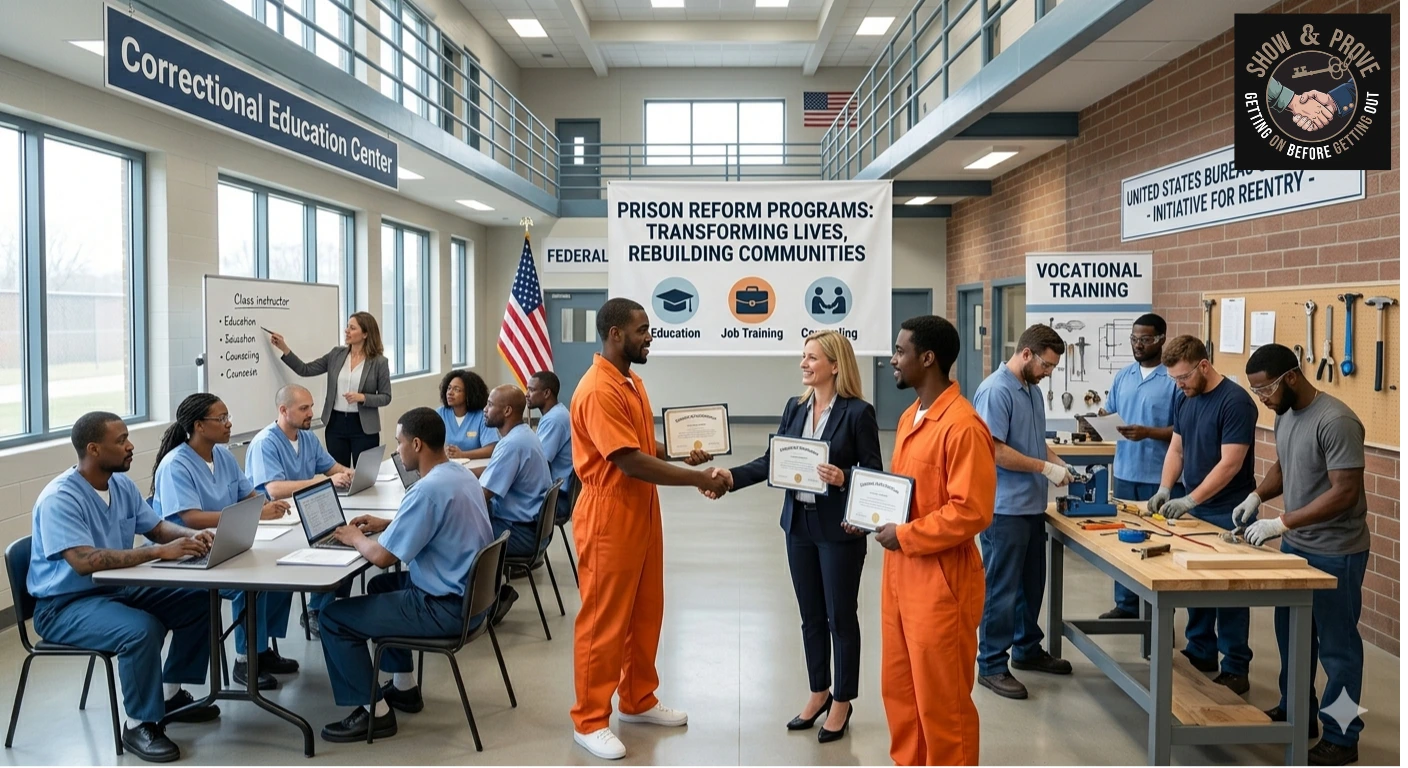
Education remains one of the most effective pillars of prison reform initiatives. Research consistently demonstrates that robust prison education programs improve employment prospects and are directly linked to meaningful recidivism reduction.
As a result, many correctional systems now offer a range of educational opportunities specifically designed to equip individuals with skills and credentials for life after release.
These programs typically include:
- GED preparation
- Literacy classes
- High school equivalency programs
- College-level courses
- Technical certifications
- Digital skills training
Education through prison reform initiatives helps individuals develop confidence, sharpen critical thinking, and earn qualifications that employers actively value.
Many advocates believe expanding access to education inside correctional facilities is among the highest-return investments available within prison reform initiatives—generating lasting benefits for individuals, families, and communities alike.
Vocational Training and Workforce Development
Employment plays a decisive role in successful reintegration, which is why vocational training has become a cornerstone of modern prison reform initiatives.
These programs teach in-demand practical skills that translate directly into employment opportunities upon release.
Common vocational programs offered through prison reform initiatives include:
- Construction trades
- Welding
- Carpentry
- Electrical work
- Culinary arts
- Manufacturing
- Automotive repair
- Computer technology
Participants gain hands-on experience and industry-relevant credentials while preparing for careers that offer genuine long-term stability.
Many correctional systems implementing prison reform initiatives also build formal employer partnerships with businesses committed to second-chance hiring—creating clear pathways to employment immediately after release.
Prison Reform and Reentry Programs
Structured reentry programs are among the most impactful prison reform initiatives helping former inmates rebuild their lives after incarceration.
These programs are specifically engineered to support individuals during the critical transition from incarceration to community living—a period when people are most vulnerable to reoffending.
Effective reentry programs within prison reform initiatives typically provide:
- Employment assistance
- Housing support
- Transportation resources
- Educational guidance
- Healthcare referrals
- Substance abuse treatment
- Financial literacy training
By addressing multiple barriers simultaneously, these prison reform initiatives substantially increase the likelihood of successful reintegration and meaningfully reduce the risk of recidivism.
The Future of Prison Reform Initiatives
The future of prison reform initiatives will focus on building even stronger pathways for successful reintegration. Policymakers, correctional administrators, and community organizations increasingly recognize that rehabilitation and lasting public safety are inseparable goals.
Emerging prison reform initiatives are expected to include:
- Expanded educational access inside correctional facilities
- Broader mental health treatment availability
- Scaled vocational training programs
- Enhanced reentry support networks
- Deeper employer engagement in second-chance hiring
- Technology-driven learning and job preparation tools
- Community-centered rehabilitation models
As these prison reform initiatives continue evolving, the central focus will remain on enabling individuals to become contributing members of society while driving down recidivism and improving community safety for everyone.
Conclusion
Prison reform initiatives helping former inmates rebuild their lives play a critical role in creating safer communities and reducing repeat offenses. While incarceration provides accountability, long-term public safety ultimately depends on what happens after an individual walks out of prison.
Education programs, vocational training, mental health treatment, housing assistance, employment support, and structured reentry services all contribute to successful reintegration. Together, these prison reform initiatives give individuals the tools and support they need to overcome obstacles, restore relationships, and build stable futures.
As the United States continues evaluating correctional policy, sustained investment in effective prison reform initiatives can help create a more balanced system—one that promotes accountability, meaningful rehabilitation, and lasting positive change for individuals and communities alike.
Frequently Asked Questions (FAQs)
What are prison reform initiatives?
Prison reform initiatives are programs and policies designed to improve correctional systems, support rehabilitation, reduce recidivism, and help formerly incarcerated individuals successfully reintegrate into society.
How do prison reform initiatives help former inmates?
These initiatives provide education, vocational training, mental health services, housing support, employment assistance, and reentry programs that help individuals rebuild their lives after release.
Why is employment important after incarceration?
Stable employment helps former inmates achieve financial independence, support their families, and significantly reduce the likelihood of returning to criminal activity.
How do reentry programs reduce recidivism?
Reentry programs—a key component of modern prison reform initiatives—address common barriers such as housing instability, unemployment, inadequate healthcare, and lack of community support, making successful reintegration far more achievable.
What role does education play in prison reform?
Education is one of the most powerful tools within prison reform initiatives—improving job opportunities, building practical skills, boosting confidence, and consistently lowering recidivism rates among formerly incarcerated individuals.
Why is housing assistance important for former inmates?
Stable housing provides the essential foundation for employment, healthcare access, family reunification, and long-term success after release—making it a priority within effective prison reform initiatives.
Can prison reform improve public safety?
Yes. Well-implemented prison reform initiatives reduce recidivism, support rehabilitation, and help former inmates become productive community members—directly contributing to safer neighborhoods and stronger communities.
What are the biggest challenges former inmates face after release?
Common challenges include securing employment, finding stable housing, accessing healthcare, managing mental health conditions, and overcoming the social stigma of a criminal record—all areas that targeted prison reform initiatives work to address.
Sources & Further Reading
New to this topic? Start with our complete guide to what prison reform involves.