
Every year, more than 600,000 people walk out of state and federal prisons in the United States, and within three years roughly two-thirds are rearrested. Prisoner reentry programs exist to break that cycle. These structured supports help formerly incarcerated people find work, housing, treatment, and community stability so they can rebuild their lives instead of returning to a cell. When they are designed well, prisoner reentry programs do not just change individual outcomes; they make entire communities measurably safer.
Table of Contents
What Are Prisoner Reentry Programs?
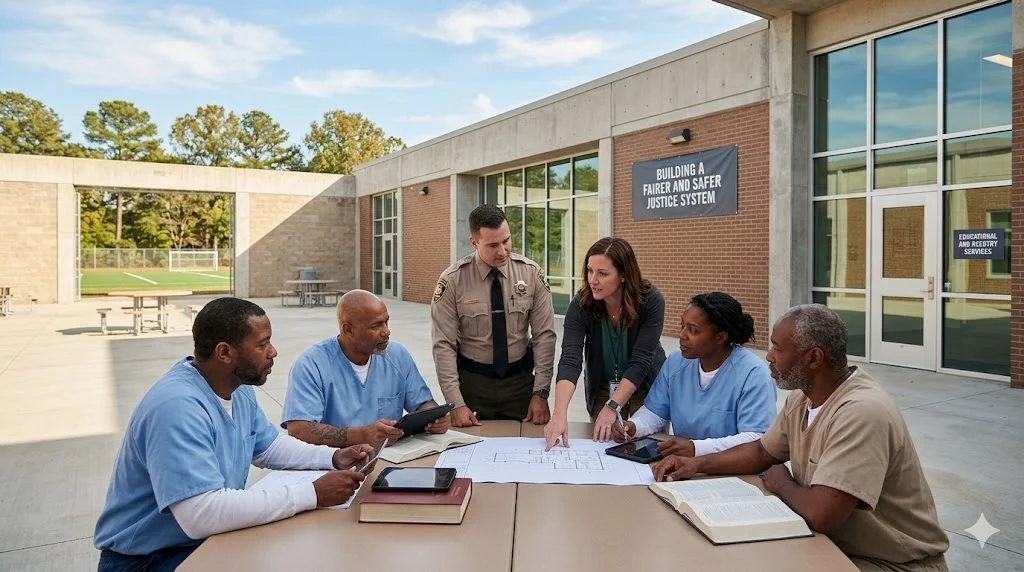
Prisoner reentry programs are coordinated services that prepare incarcerated individuals for release and support them through the difficult first months and years back in society. Some begin behind the walls, months before release, while others operate entirely in the community. Their shared goal is simple: replace the cycle of arrest, incarceration, and re-arrest with a stable, productive return home. You can explore the foundations of this work on our reentry programs overview.
Effective reentry is rarely about a single service. It is a package: a job lead, a place to sleep, treatment for addiction, an ID card, and someone who answers the phone at 9 p.m. when things fall apart. The best prisoner reentry programs connect those pieces into one continuous plan that follows a person from the cell to the community.
Why Prisoner Reentry Programs Matter
High recidivism is expensive in every sense: more victims, more crime, and billions of taxpayer dollars spent re-incarcerating the same people. Reducing reoffending is therefore both a public-safety and a fiscal priority. That is the core argument for investing in reentry, and it is closely tied to the broader goal of recidivism reduction.
Done right, prisoner reentry programs change the math. When a returning citizen finds steady employment and stable housing, the likelihood of returning to prison drops sharply. The savings from each person who stays out, instead of cycling back in, can fund services for many more.
The Main Types of Prisoner Reentry Programs
There is no single model. Strong prisoner reentry programs combine several of the following components, matched to each person’s risks and needs.
1. Employment and Job Training
Work is the single strongest predictor of a successful return. Vocational training, apprenticeships, work-release placements, and partnerships with second-chance employers give people both income and identity. Many of the evidence-based prison reform programs with the best results put employment at the center.
2. Education and Skills
From GED completion to college coursework and digital-literacy classes, education raises earning power and lowers reoffending. Our look at prison education programs details how learning inside changes outcomes outside.
3. Stable Housing
Without an address, almost nothing else holds. Transitional housing, halfway houses, and rapid-rehousing assistance keep people from the streets during the fragile first weeks, when the risk of failure is highest.
4. Substance Use and Mental Health Treatment
A large share of incarcerated people live with substance use disorders or untreated mental illness. Continuity of care, including medication-assisted treatment that starts inside and continues after release, is one of the most powerful tools in any reentry toolkit and a pillar of effective prison rehabilitation.
5. Mentoring and Family Support
Positive family ties and credible mentors, often people who have been through reentry themselves, provide the accountability and encouragement that formal services cannot. These relationships frequently make the difference between giving up and pushing through.
Do Prisoner Reentry Programs Actually Work?
The evidence is increasingly clear: well-run prisoner reentry programs cut reoffending. In a 2025 report from the California Department of Corrections and Rehabilitation, participants in community reentry programs recidivated far less than non-participants, with more than 80 percent of women and 74 percent of men avoiding a return after release.
Other rigorous studies echo the pattern. An evaluation of Illinois work-release Adult Transition Centers found participants had roughly a 16 percent lower risk of rearrest and a 37 percent lower risk of reincarceration than a matched comparison group. Research summarized by the National Institute of Justice similarly shows that structured, well-matched reentry models significantly reduce rearrests and reconvictions.
The common thread is design. Programs that target the right people, deliver real services rather than paperwork, and maintain support after release produce the strongest results. You can see this principle in action across many prison reform initiatives helping former inmates rebuild their lives.
Barriers Returning Citizens Still Face
- Employer stigma: a criminal record still closes many doors, even for qualified applicants.
- Housing discrimination: public and private housing policies frequently exclude people with records.
- Debt and fees: court fines, supervision fees, and child-support arrears can pile up during incarceration.
- Documentation gaps: a missing ID or Social Security card can block work, housing, and benefits.
- Service cliffs: support that ends abruptly after a few weeks leaves people stranded at the riskiest moment.
How to Strengthen Prisoner Reentry Programs
Policymakers, practitioners, and communities can all help make prisoner reentry programs more effective:
- Start reentry planning months before release, not on the day someone walks out.
- Bridge services across the prison gate so treatment and case management continue without interruption.
- Expand second-chance hiring and fair-chance housing policies.
- Fund peer mentors and lived-experience staff who build trust quickly.
- Measure outcomes honestly and redirect funding toward what actually works.
Frequently Asked Questions About Prisoner Reentry Programs
When do prisoner reentry programs begin?
The strongest programs begin inside, often three to six months before release, with planning for housing, employment, and treatment, then continue in the community for a year or more.
Who pays for reentry services?
Funding comes from a mix of federal and state corrections budgets, grants, nonprofits, and faith-based and community organizations. Because reentry reduces costly re-incarceration, many programs more than pay for themselves.
How can I support prisoner reentry programs?
You can volunteer as a mentor, hire fair-chance candidates, donate to local providers, or advocate for fair-chance policies. Visit our Get Involved page to take the next step.
The Bottom Line
Prisoner reentry programs are among the most effective, humane, and cost-saving tools in criminal justice reform. They turn the moment of release from a setup for failure into a genuine second chance, and they make all of us safer in the process. Building and funding them well is not charity; it is smart public policy.
New to this topic? Start with our complete guide to the goals of prison reform.