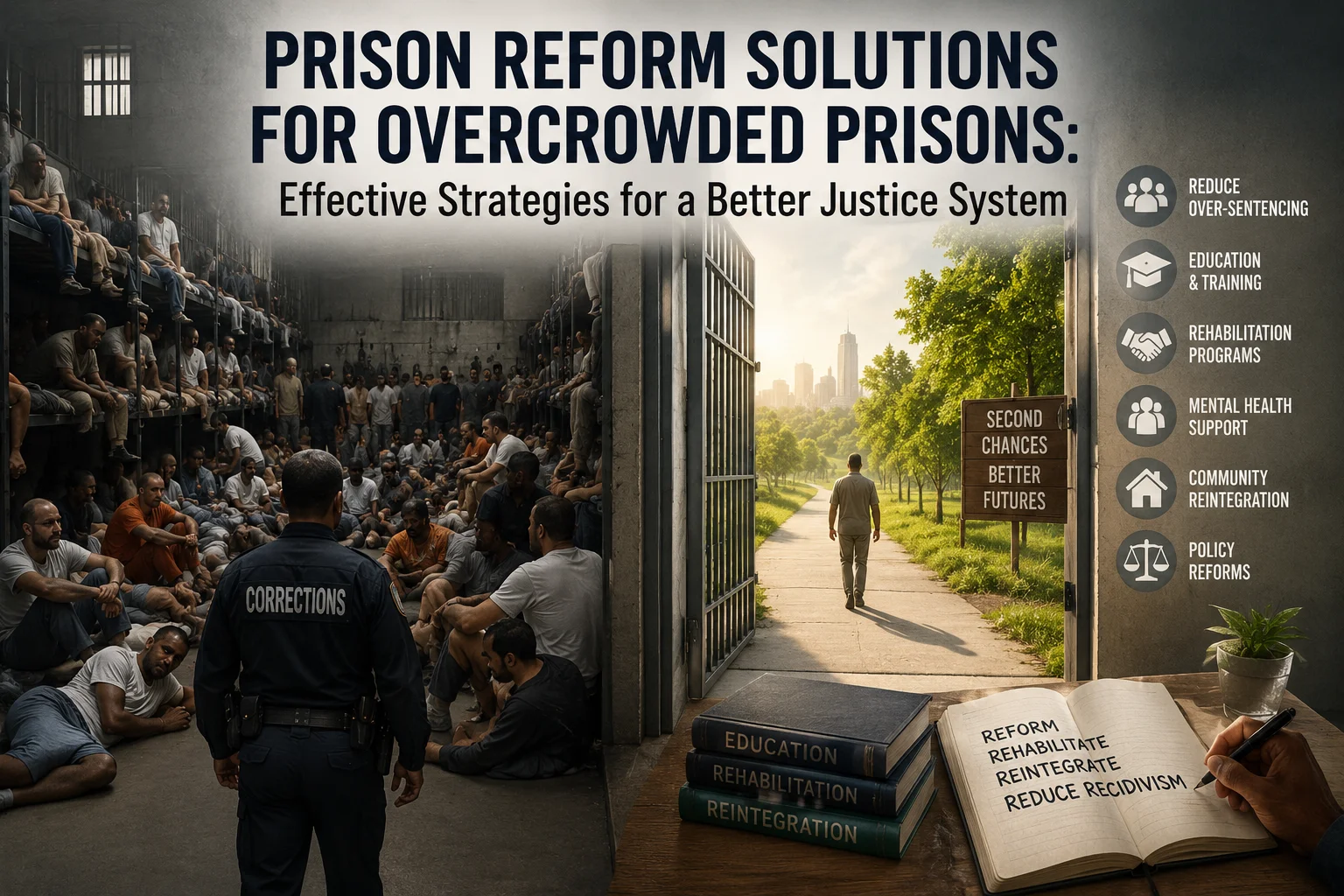
Mass incarceration describes the scale and concentration of imprisonment in the United States — a country that holds roughly 2.4 million people in custody on any given day and incarcerates at a higher rate than any other independent democracy.
Key Takeaways
- About 2.4 million people are held in US prisons, jails and detention facilities on any given day.
- The rate is roughly 580 per 100,000 residents.
- Counting probation and parole, more than 5 million people are under correctional control.
- The estimated annual fiscal cost is $445 billion.
- Incarceration is mostly a state matter — federal reform reaches only part of the system.
The Numbers
Figures below are drawn from the Prison Policy Initiative’s annual accounting, which is the standard reference for the full picture across prisons, jails and detention (Mass Incarceration: The Whole Pie 2026).
| Measure | Figure |
|---|---|
| People incarcerated on a given day | ~2.4 million |
| Incarceration rate | 580 per 100,000 |
| Under correctional control (incl. probation/parole) | 5+ million |
| Estimated annual fiscal cost | $445 billion |
The system is also fragmented. People are held across state prisons, local jails, federal facilities, immigration detention, juvenile facilities and involuntary commitment — which is why single-source figures often disagree. They are frequently counting different slices.
Why Jails Are Different From Prisons
A distinction that changes how the numbers should be read. Prisons hold people serving sentences, usually longer than a year. Jails are locally run and hold people serving short sentences and people awaiting trial who have not been convicted.
A substantial share of the jail population is legally innocent and detained largely because they could not afford bail. See our guide to the difference between jail and prison.
Where Reform Actually Happens
Most incarcerated people are held under state authority, so state legislatures and departments of correction determine most outcomes. Federal legislation such as the First Step Act (2018) applies only to the federal system, which is a minority of the total. National reform is, in practice, fifty separate reform efforts.
The Debate
Reducing incarceration is argued on cost, on evidence that long sentences show diminishing returns for public safety, and on the documented disparities in who is imprisoned.
The counter-arguments deserve stating plainly: incapacitation prevents offending during confinement regardless of rehabilitation; some sentences are proportionate to serious harm done; victims can be under-represented in reform debate; and decarceration without adequate community investment can shift a problem rather than solve it. A serious position engages these rather than dismissing them.
Frequently Asked Questions
How many people are incarcerated in the US?
About 2.4 million people are held in prisons, jails and detention facilities on any given day, according to Prison Policy Initiative figures for 2026. More than 5 million are under correctional control once probation and parole are counted.
What does mass incarceration mean?
The scale and concentration of imprisonment in the United States, which incarcerates at roughly 580 per 100,000 residents – the highest rate of any independent democracy.
How much does mass incarceration cost?
An estimated $445 billion per year once policing, courts, corrections and associated costs are counted, according to Prison Policy Initiative analysis.
Sources & Further Reading
- Prison Policy Initiative — Mass Incarceration: The Whole Pie 2026
- Prison Policy Initiative — Following the Money of Mass Incarceration 2026
- Bureau of Justice Statistics — Recidivism and Reentry
Last reviewed August 2026.
Part of our complete guide to prison reform. See also recidivism.