Understanding the Difference Between Jail and Prison
Table of Contents
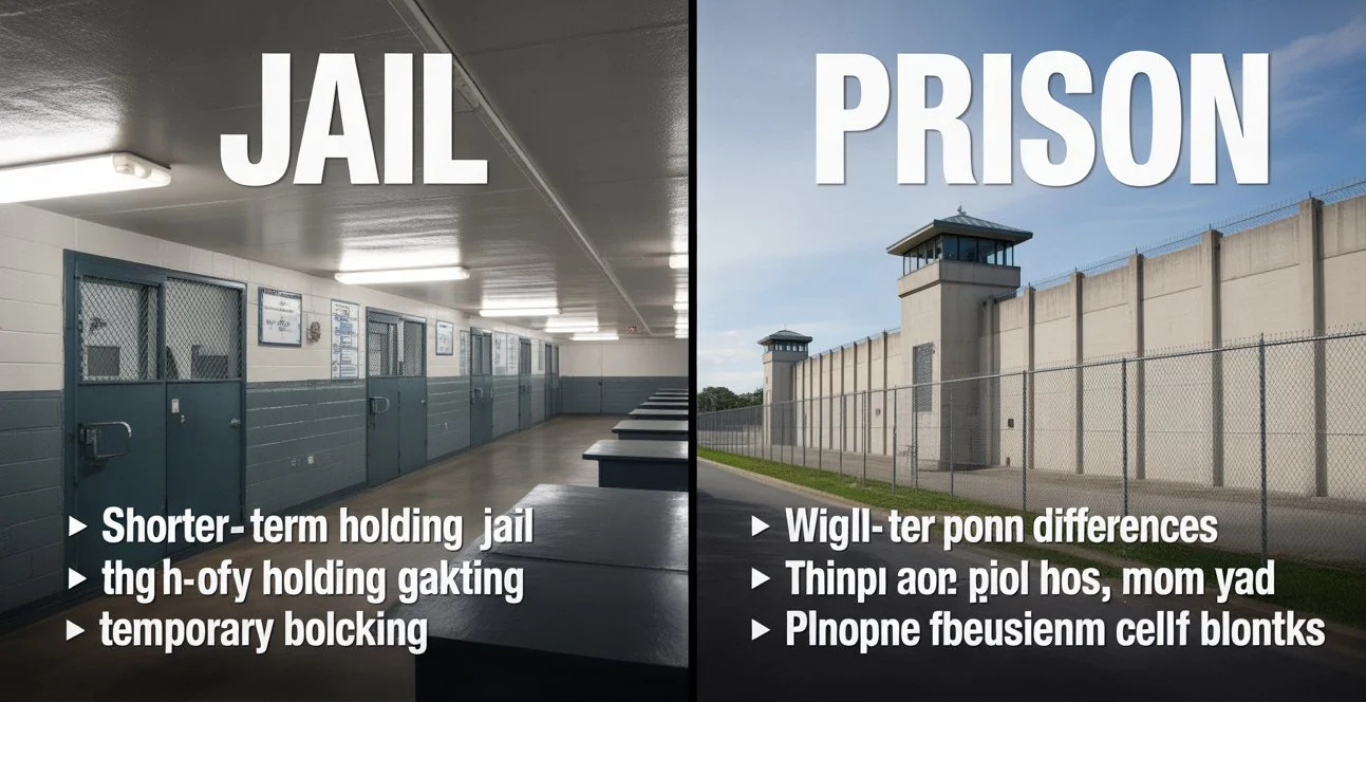
Difference between jail and prison is one of the most commonly misunderstood distinctions in the United States criminal justice system. Although people often use these two terms interchangeably in everyday conversation, jail and prison are fundamentally different institutions with different purposes, populations, and governing structures. Understanding the difference between jail and prison is essential for anyone navigating the legal system, supporting an incarcerated loved one, or simply trying to understand how American corrections work.
What Is a Jail?
A jail is a short-term detention facility typically operated by a local city or county government. Jails are designed to hold individuals for short periods, usually less than one year. They serve as the first point of contact with the correctional system after an arrest.
People are usually placed in jail for one of several reasons. Some are awaiting their court hearing and have not yet been tried. Others have been unable to pay bail and must remain detained until their case is resolved. Still others are serving very short sentences for minor misdemeanor offenses. Because jails operate at the local level, they are also used for immigration holds and short-term federal detentions in some jurisdictions.
According to the Bureau of Justice Statistics, local jails admit millions of people each year in the United States. The jail population fluctuates daily as individuals are booked, released on bail, transferred, or sentenced. This constant turnover is one of the defining characteristics of jails compared to prisons.
Because jails are managed locally, the quality of services, programming, and living conditions can vary significantly from one county to the next. A large urban jail in a major city may have medical staff, mental health counselors, and educational programs, while a small rural jail may offer very limited resources. This inconsistency is one of the challenges advocates and reformers continue to address when discussing the difference between jail and prison in terms of inmate welfare.
What Is a Prison?
A prison is a long-term correctional facility managed by a state or federal government. Prisons are designed for individuals who have already been convicted of a crime and sentenced to serve more than one year of incarceration. The distinction here is critical: unlike jails, everyone in a prison has been found guilty in a court of law and is serving an active sentence.
Prisons are more structured and regimented than jails. They typically house inmates for months, years, or even decades, and therefore require far more comprehensive infrastructure. State prisons are funded and operated by individual state departments of corrections, while federal prisons are run by the Federal Bureau of Prisons (BOP) and hold those convicted of federal crimes such as drug trafficking, bank robbery, or immigration offenses.
Because inmates in prison are serving longer sentences, these facilities invest more significantly in rehabilitation, education, and vocational training programs. The goal in many modern prisons is not only punishment but also preparing individuals to successfully reintegrate into society upon release, which directly ties into broader discussions about prison reform.
Key Differences Between Jail and Prison
When examining the difference between jail and prison, several core factors stand out. These differences affect not only the individuals incarcerated but also the communities and systems surrounding them.
Length of Stay
The most fundamental difference between jail and prison is the length of time a person is held. Jails are intended for short-term detention, typically less than one year. Prisons hold inmates for longer periods, ranging from one year to life. This difference in time served shapes nearly every other aspect of how each facility operates.
Type of Offenses
Jails typically hold individuals accused or convicted of misdemeanors and minor infractions. Prisons hold individuals convicted of felonies, which are more serious crimes such as assault, robbery, murder, or major drug offenses. The type of offense is one of the clearest indicators of where a person will be held within the criminal justice system, and it illustrates the difference between jail and prison in terms of the population served.
Legal Status
In jails, many individuals are legally innocent. They have been charged but not yet tried or convicted. Being held in jail before trial is known as pre-trial detention, and it can last days, weeks, or even months depending on the complexity of the case and the court schedule. In prisons, every inmate has been convicted and sentenced, meaning their guilt has been established in a court of law. This distinction is a critical part of understanding the difference between jail and prison from a legal perspective.
Management and Oversight
Jails are operated by local governments, typically the county sheriff or a city corrections department. Because they are locally funded and managed, their budgets and policies are subject to local political decisions. Prisons, on the other hand, are managed at the state or federal level, which generally means more standardized policies, larger budgets, and more consistent programming across facilities.
Who Is Held in Jail vs Prison?
Understanding who is actually held in each type of facility is an important dimension of the difference between jail and prison. Jail populations are diverse and constantly shifting. On any given day, a local jail may hold someone arrested the night before on a DUI charge, a person waiting months for a trial date, someone serving a 90-day sentence for a misdemeanor, and a federal detainee being temporarily housed by agreement.
Prison populations, by contrast, are more stable. Inmates arrive with known sentences and tend to stay for longer periods. Prison populations include people convicted of violent crimes, drug offenses, property crimes, and white-collar crimes. The severity and classification of the crime typically determines which security level of prison the individual is assigned to.
Purpose of Jail vs Prison
The purposes of jail and prison overlap in some ways but differ significantly in others. Both serve the function of removing individuals from the community who are deemed a risk or who have broken the law. However, their deeper purposes reflect the difference between jail and prison more clearly.
Jails serve primarily an administrative and pre-trial function. They ensure that individuals appear for court dates, prevent flight risk, and hold those who cannot be safely released while awaiting trial. For those serving short sentences, jails provide a form of punishment for minor criminal behavior.
Prisons serve a broader range of purposes including punishment, deterrence, incapacitation, and rehabilitation. Modern correctional philosophy increasingly emphasizes rehabilitation as a key goal, recognizing that most people who go to prison will eventually be released. Preparing them to lead law-abiding lives reduces recidivism and improves outcomes for the broader community.
Security and Living Conditions
Security and living conditions are another area where the difference between jail and prison becomes apparent. Jails generally operate with fewer security levels than prisons. Most jails have a single general population with some segregation for high-risk individuals. The facilities themselves tend to be older, more crowded, and less equipped for long-term habitation.
Prisons operate across multiple security classifications, typically including minimum, low, medium, high, and maximum security levels. An individual’s security level is determined by factors including the nature of their offense, their criminal history, behavioral assessments, and risk evaluations. Maximum security prisons house the most dangerous offenders and impose the strictest rules and movement restrictions.
Living conditions in prisons are generally more structured than in jails, with established daily routines, defined work assignments, access to recreation, and more consistent programming. However, concerns about overcrowding, inadequate mental health care, and cruel and unusual punishment remain serious issues in both systems.
Programs and Rehabilitation
One of the starkest practical differences between jail and prison is the availability of programs. Because jail stays are short and unpredictable, it is difficult for jails to offer sustained programming. Educational courses, drug treatment, mental health services, and vocational training are either absent or extremely limited in most jails. This is a significant gap, especially given that many people cycle in and out of jail repeatedly without receiving the support they need.
Prisons, by contrast, have the time and infrastructure to offer more comprehensive programs. Many state prisons provide GED and adult literacy classes, vocational training in trades like carpentry, plumbing, and computer skills, substance abuse treatment programs, mental health counseling, and faith-based programs. Research consistently shows that participation in prison education and rehabilitation programs is associated with lower rates of reoffending after release. This is why these programs are a central component of effective criminal justice reform strategies.
Cost and Funding
The cost of incarceration is another dimension of the difference between jail and prison. Jails are funded primarily through local county budgets and vary widely in their resources. Some counties invest heavily in their jails while others struggle with underfunding and aging infrastructure. The cost per inmate per day in a jail depends entirely on the local jurisdiction’s funding priorities and population size.
State and federal prisons are funded at a broader level, which typically allows for more consistent resource allocation. However, the total cost of imprisonment is enormous. Across the United States, the annual cost of incarcerating one person in a state prison can exceed $40,000 and in some high-cost states reaches over $100,000 per year. These staggering costs make the case for investing in prevention, diversion programs, and rehabilitation rather than relying solely on incarceration.
State vs Federal Prisons
When discussing prisons specifically, it is important to understand that there are two distinct systems: state prisons and federal prisons. This is a layer of the difference between jail and prison that many people overlook. State prisons hold individuals convicted of violating state laws, which includes the majority of criminal offenses such as assault, theft, and murder. Each of the 50 states operates its own prison system with its own policies, programming, and conditions.
Federal prisons, run by the Bureau of Prisons, hold those convicted of federal crimes. These include drug trafficking across state lines, bank robbery, federal fraud, immigration offenses, and crimes committed on federal property. Federal prisons are generally considered to have more consistent conditions and programming than many state facilities, though they face their own overcrowding and resource challenges.
Why the Difference Matters
Understanding the difference between jail and prison is not just a matter of vocabulary. It has real consequences for individuals, families, and communities. For someone who has been arrested, knowing whether they are likely to be held in jail or transferred to prison helps them understand their legal situation and what to expect in the days, weeks, or years ahead.
For families, the distinction matters because visiting rules, mail policies, phone access, and commissary procedures differ significantly between jails and prisons. For advocates and policymakers, the difference between jail and prison points to the need for targeted reforms at both the local and state level. Reforming jails requires working with county sheriffs and local governments. Reforming prisons requires engagement with state legislatures and federal agencies.
You may also want to review your legal rights after being arrested and learn about broader criminal justice reform efforts that affect both systems.
Conclusion
Jail and prison are both essential components of the United States correctional system, but the difference between jail and prison is significant in terms of purpose, population, duration, management, and programming. Jails are short-term, locally operated facilities primarily used for pre-trial detention and minor offenses. Prisons are long-term, state or federally operated facilities designed to house convicted individuals serving sentences of more than one year.
Understanding this difference between jail and prison is important for individuals navigating the justice system, families supporting loved ones, and advocates working to improve outcomes for incarcerated people. For those interested in the broader context, explore what constitutes cruel and unusual punishment and the ongoing push for meaningful prison reform in the United States.
New to this topic? Start with our complete guide to what prison reform means.