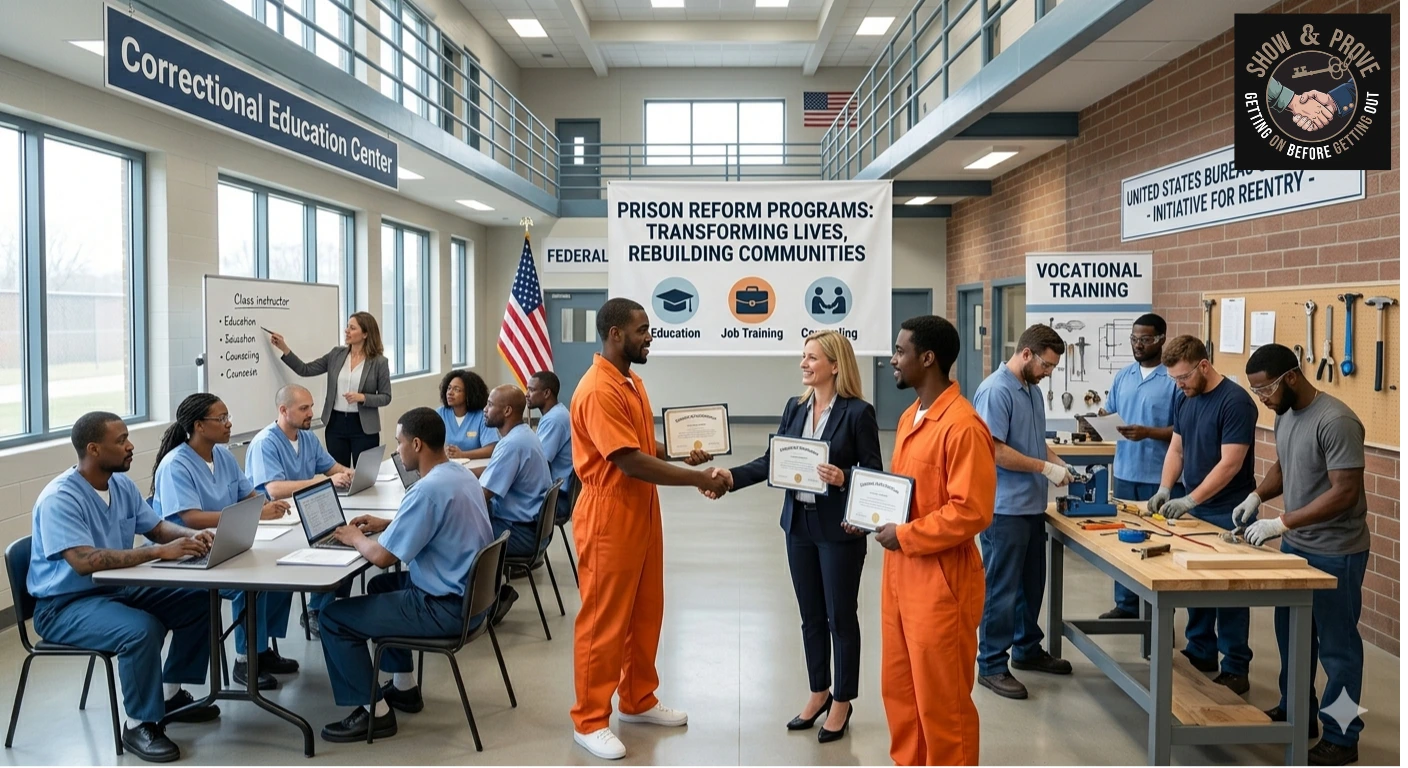
Vocational training in prison teaches a trade that can be worked on release. It is among the best-evidenced interventions in corrections, and among the most inconsistently available — and the value of a given programme depends heavily on whether your state will licence you to use it.
Key Takeaways
- Participants in correctional education and vocational training were 13% more likely to be employed after release and 43% less likely to reoffend (RAND Corporation).
- RAND estimated a return of roughly $5 for every $1 spent.
- Check state licensing rules before enrolling — some trades bar people with certain convictions regardless of training.
- A recognised, portable credential is worth more than an in-house certificate.
What the Evidence Shows
A widely cited RAND Corporation analysis found correctional education participants were 43% less likely to reoffend and 13% more likely to find work after release, with an estimated return of about $5 per $1 invested (RAND Corporation). One caveat worth stating: people who volunteer for training may differ from those who do not, which complicates causal claims. The direction of the evidence is nonetheless consistent.
Common Trades Taught in Prison
- Welding — strong demand, certification is portable across states
- Construction trades — carpentry, framing, drywall, roofing
- HVAC and plumbing — higher earnings, but often licensed
- Automotive repair — widely taught, ASE certification recognised nationally
- Culinary arts — accessible sector, fewer licensing barriers
- Commercial driving — strong demand, though CDL eligibility depends on the offence
- Computer and IT support — expanding, though access to equipment varies
- Barbering and cosmetology — frequently licensed, and licensing boards vary widely on records
The Licensing Trap
This is the most common wasted investment in correctional training: completing a programme in a trade the state will not licence you to practise. Barbering, cosmetology, healthcare-adjacent roles and some construction specialisms are frequently affected.
Rules differ by state and by board. Some consider only convictions related to the work; others apply broader bars. Many boards allow a pre-determination — a ruling on your eligibility before you invest the time. Ask for one before enrolling, not after.
How to Choose a Programme
- Confirm licensing eligibility first in the state you will be released into.
- Prefer recognised external credentials — ASE, AWS, OSHA, ServSafe — over facility-issued certificates.
- Check the labour market where you are going, not where the prison is.
- Ask whether the programme includes job placement or employer relationships.
- Keep documentation. Request copies of certificates and hours before release; obtaining them afterwards is far harder.
Frequently Asked Questions
Does vocational training in prison reduce reoffending?
The evidence indicates yes. RAND Corporation research found correctional education and vocational training participants were 43% less likely to reoffend and 13% more likely to be employed after release.
What trades are taught in prison?
Commonly welding, construction trades, HVAC, plumbing, automotive repair, culinary arts, commercial driving, IT support, and barbering or cosmetology. Availability varies significantly by facility and state.
Can a felony stop you getting a trade licence?
Sometimes. State licensing boards set their own rules and some restrict or deny licences based on convictions. Many boards offer a pre-determination of eligibility, which is worth requesting before enrolling in training.
Sources & Further Reading
- RAND Corporation — Education and Vocational Training in Prisons Reduces Recidivism, Improves Job Outlook
- Bureau of Justice Statistics — Recidivism and Reentry
Licensing rules vary by state and change over time. Confirm with the relevant board. Last reviewed August 2026.
Part of our complete guide to prison reform. See also prison education programs and finding work after prison.