
Table of Contents
The United States still holds one of the highest incarceration rates in the world, and the ripple effects reach far beyond prison walls — a topic explored in depth in our guide on what prison reform actually means — touching families, local economies, public safety, and community trust in institutions. Prison reform isn’t an abstract policy debate anymore; it’s a practical question about what kind of justice system actually works. Here are seven reasons prison reform matters in 2026, and why the conversation keeps growing louder. Understanding why prison reform is important starts with looking at what the data actually shows.
The public-safety argument is the one most often raised against reform, and it is also the strongest argument for it. We set out what the recidivism and cost data actually show separately, including the RAND finding on correctional education.
1. High Incarceration Rates Come With a High Cost
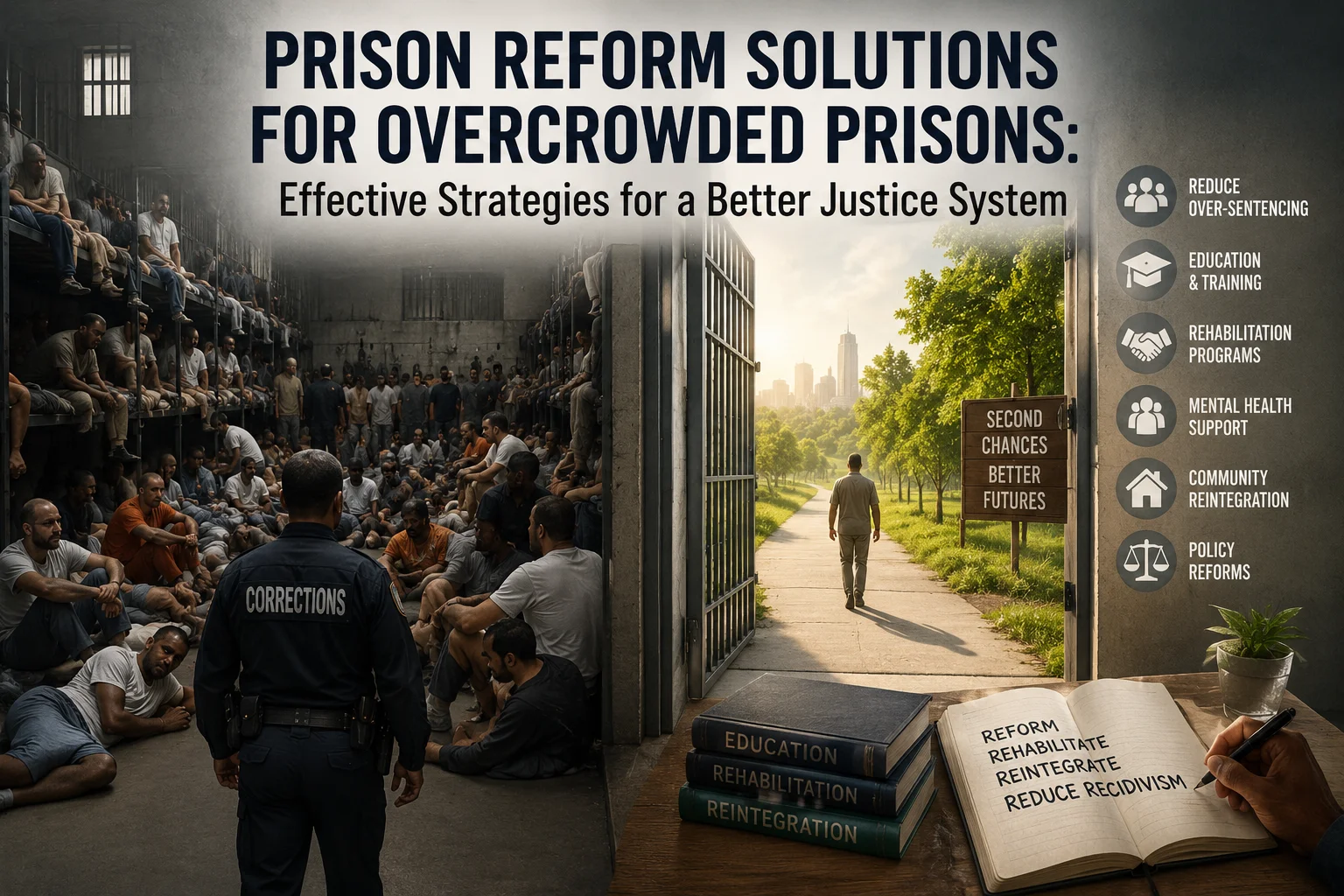
Housing a single incarcerated person costs states tens of thousands of dollars a year, according to Vera Institute research on state prison spending, funds that come directly from taxpayers. When prisons operate primarily as holding facilities rather than places that prepare people for successful reentry, that spending produces little long-term public benefit. Reform-minded approaches — diversion programs, alternative sentencing, and treatment-based interventions — often cost less while producing better outcomes, freeing up public budgets for schools, healthcare, and infrastructure.
2. Recidivism Keeps Communities Trapped in a Cycle
A large share of people released from prison are rearrested within a few years, a trend tracked closely by the Bureau of Justice Statistics, often for reasons tied directly to the lack of preparation they received while incarcerated: no job skills, no stable housing plan, and limited access to treatment for underlying issues like addiction or mental illness. Reform efforts that prioritize education programs, vocational training, and mental health care while someone is incarcerated are consistently linked to lower rates of reoffending, breaking a cycle that otherwise repeats across generations.
3. Overcrowding Undermines Safety for Everyone Inside
Many facilities operate above their intended capacity, which strains everything from healthcare access to staff-to-inmate ratios. Overcrowded conditions increase violence, make it harder to deliver programming, and put both incarcerated people and corrections staff at greater risk. Reform measures aimed at reducing unnecessary incarceration — such as bail reform and sentencing adjustments for nonviolent offenses — directly ease this pressure.
4. Racial and Economic Disparities Remain Deeply Embedded
Incarceration rates in the U.S. fall unevenly across racial and economic lines, a pattern shaped by decades of policy choices in policing, sentencing, and access to legal representation. Reform advocates argue that a fair justice system has to actively address these disparities rather than treat them as a fixed backdrop — through steps like sentencing guideline reviews, expanded public defender resources, and data transparency on who is being charged, convicted, and sentenced.
5. Mental Health and Substance Use Are Often Criminalized, Not Treated
A substantial portion of the incarcerated population lives with untreated mental illness or substance use disorders. Without adequate treatment, prison can worsen these conditions rather than address them, and people cycle back into the system instead of getting the care they need. Reform efforts that expand access to treatment, both during incarceration and through diversion programs that redirect people to treatment instead of jail, are one of the most consistently supported paths to better outcomes.
6. Families and Children Bear Hidden Costs
Incarceration doesn’t just affect the person behind bars — it disrupts households, strains finances, and can leave children without a parent for years at a time. Research consistently links parental incarceration to worse outcomes for kids, from educational setbacks to a higher likelihood of future justice-system involvement themselves. Reforms that support family contact during incarceration and ease the transition back home help limit this generational impact.
7. Successful Reentry Strengthens Communities, Not Just Individuals
When someone leaves prison with a job plan, stable housing, and ongoing support, they’re far more likely to stay out of the system — and that benefits the entire community around them: lower crime, less strain on social services, and a stronger local workforce. Reentry-focused reform, including reentry programs, “ban the box” hiring policies, transitional housing, and mentorship, treats successful reintegration as a shared community investment rather than solely the responsibility of the person who was incarcerated.
The Bottom Line
Prison reform matters in 2026 because the current system’s costs — financial, social, and human — are well documented, and the alternatives are increasingly well tested. From reducing recidivism to easing overcrowding to giving families a better shot at staying together, reform isn’t about being “soft” on crime; it’s about building a system that actually reduces crime and repairs harm over the long term.
FAQs
Does prison reform mean releasing everyone from prison?
No. Prison reform covers a wide range of changes — from sentencing policy to in-prison programming to reentry support — and doesn’t require releasing people convicted of serious violent offenses. Much of it focuses on how the system handles nonviolent offenses and how it prepares people for life after release.
Is prison reform a partisan issue?
Not entirely. Many reform measures, particularly those focused on cost savings and reducing recidivism, have drawn support from both sides of the political aisle, even as specific proposals remain debated.
What is the single biggest driver of reform efforts today?
There isn’t one single reason prison reform is important right now — cost pressure on state budgets, persistent recidivism rates, and growing attention to racial and economic disparities are all cited as major factors pushing reform conversations forward.
For the full picture, see our complete prison reform guide.